Introduction
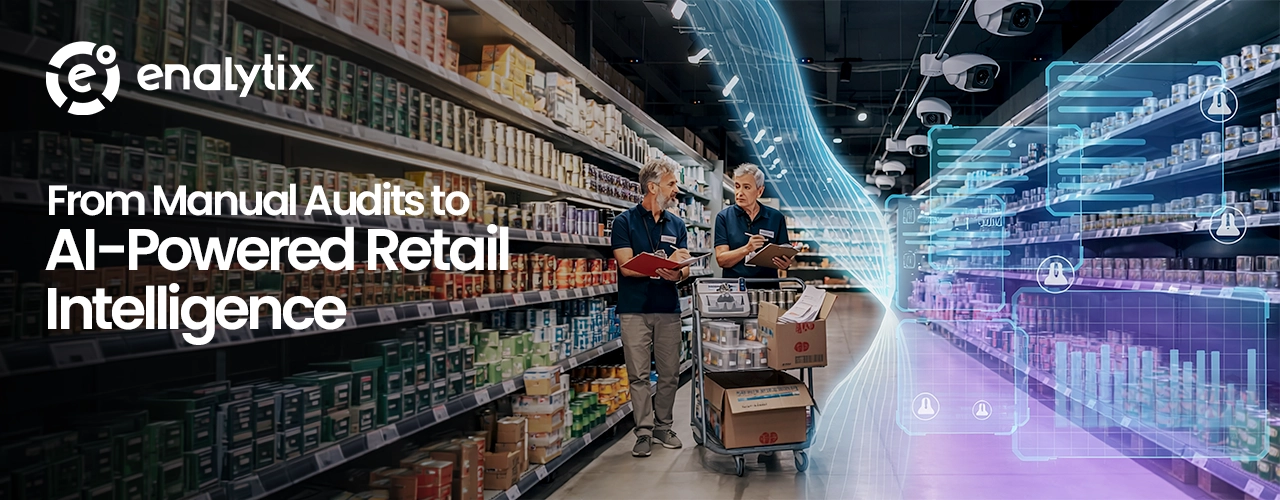
For decades, the retail audit was a dreaded but necessary ritual. A manager with a clipboard or a tablet would walk the floor, ticking boxes and trying to capture the “vibe” of the store. But as we move through 2026, the industry has finally hit a breaking point with these traditional methods. The speed of modern commerce simply doesn’t allow for “once-a-week” snapshots that miss 90% of the action. Today, if you aren’t looking at your store through the lens of AI-based video analytics, you aren’t really managing a business you’re just guessing. By leveraging Video analytics software to track every movement and interaction, retailers can finally replace those outdated manual checks with a stream of 24/7, objective data that actually moves the needle.
Problems with manual store audits
The core issue with manual audits is that they are inherently reactive. By the time a report is compiled, reviewed, and acted upon, the customer trend it captured has already vanished.
- The “Snapshot” Trap: A manual audit only tells you what happened during the 60 minutes the auditor was on the floor. It ignores the other 23 hours of the day.
- The Inconsistency Factor: Five different managers will give you five different versions of a “clean” or “well-stocked” shelf. This lack of standardization makes it impossible to compare performance across multiple locations accurately.
- High Operational Drain: Sending senior staff to conduct audits is an expensive use of talent. Instead of coaching teams or closing sales, they are stuck doing clerical data entry.
Gaps caused by human-led observations
Humans are wonderful at empathy, but we are statistically terrible at objective, large-scale data collection. In a high-footfall retail environment, human-led observations leave massive “blind spots.”
- Selective Perception: An observer naturally focuses on the loudest customer or the messiest aisle, often missing the subtle behavior of the 50 other people in the store who are silently struggling to find a product.
- The Hawthorne Effect: We’ve all seen it, the moment an auditor walks in, the staff becomes twice as active and the “service” becomes impeccable. This “staged” performance gives leadership a false sense of security, hiding the systemic issues that happen when the boss isn’t looking.
- Data Fragmentation: Humans can’t quantify “intent.” We can see that a customer bought a shirt, but we can’t manually track the 10 people who picked it up, looked at the price tag, and put it back. That is lost revenue data that never makes it into a manual report.
How AI replaces audits with continuous insights
This is where 2026 technology changes the narrative. AI Behavior Analytics transforms your existing surveillance cameras into a Living Audit System. It’s not a one-time check; it’s a 24/7 stream of intelligence.
- From Samples to Totality: AI doesn’t look at a “sample” of customers; it analyzes 100% of the footfall. Every movement is a data point, turning the entire store journey into a digital map.
- Real-Time Intervention: Unlike a paper audit that sits in an inbox, AI provides “Active Insights.” If a queue exceeds five people, or if a high-value zone has been empty of staff for 10 minutes, the system triggers an immediate alert.
- Objective Truth: AI doesn’t have “bad days.” It applies the same logic and parameters to a store in Delhi as it does to one in Dubai, giving leadership a truly level playing field for performance reviews.
Behaviour metrics tracked automatically
To replace an audit, the AI must track more than just “people entering.” In 2026, the metrics have become incredibly granular and specific:
- Dwell Time & Engagement: The system calculates exactly how long a customer stands in front of a display. High dwell time with low conversion is a red flag for poor pricing or confusing packaging.
- Pathing & Bottlenecks: AI generates “Spaghetti Maps” showing the most common routes taken. This helps in identifying “dead zones” that customers are bypassing entirely.
- Product Interaction: Through advanced gesture detection, AI can identify when a product is picked up, even if it isn’t bought. This is the retail equivalent of a “web click” but in the physical world.
- Staff Interaction Rates: It tracks the “Time to Greet.” How long does a customer wander before a staff member approaches them? This is the ultimate metric for service quality.
Benefits for store managers & leadership
For those at the helm, moving away from manual audits is like turning the lights on in a dark room.
- Empowered Managers: Instead of spending 10 hours a week on paperwork, managers spend that time on the floor, training staff based on the specific “red alerts” the AI provides.
- Data-Driven Merchandising: Leadership can finally settle debates about floor layouts with hard evidence. If the data shows that 80% of customers turn left but the “Hero Product” is on the right, the fix is obvious and immediate.
- Remote Oversight: Regional leaders can “audit” 50 stores from a single dashboard. They can zoom into specific issues without the need for constant travel, drastically reducing the corporate carbon footprint and travel expenses.
Cost, efficiency, and performance improvements
Ultimately, the shift to AI behavior analytics is a financial decision. The ROI (Return on Investment) in 2026 is no longer a theory; it’s a proven fact.
- Labor Optimization: By understanding footfall heatmaps, stores can schedule staff based on “Power Hours” rather than generic shifts. This reduces overstaffing during lulls and prevents lost sales during peaks.
- Shrinkage & Loss Prevention: Continuous monitoring identifies “suspicious dwell patterns” in high-value aisles, allowing security to intervene before a theft occurs, which is far more effective than auditing “missing stock” after the fact.
- The Conversion Lift: When you fix the gaps identified by AI like long wait times or poorly placed stock conversion rates typically see a 12% to 18% lift. In the thin-margin world of retail, that is the difference between thriving and closing down.
The manual audit died because it couldn’t keep up with the modern shopper. In 2026, the stores that win are the ones that treat behavior analytics as the heartbeat of their operations constant, accurate, and vital.
Conclusion
Let’s be honest, nobody actually enjoys manual audits. Managers hate the paperwork, and staff hate the feeling of being “watched” for an hour. Beyond the boredom, the real danger is that manual checks give us a false sense of control. We think we know our stores because we have a filled-out checklist, but the numbers usually tell a different story the moment the auditor walks out the door.
Switching to AI behavior and AI video analytics isn’t about chasing a trend; it’s about finally seeing your business for what it really is. It’s about knowing why a customer walked out empty-handed on a busy Tuesday morning, not just guessing during a monthly review. In 2026, the competitive edge belongs to the retailers who stop relying on “gut feelings” and start looking at the hard, unfiltered data. The technology is here, the ROI is proven, and frankly, the old clipboard just can’t keep up anymore. It’s time to stop auditing and start actually understanding.
Leave a Reply