Introduction
Nobody likes standing in a long line under the sun waiting for a 60-second water ride.
But during weekends or holidays, that’s exactly what happens in many water parks. Some rides stay overloaded for hours while other sections remain almost empty. Staff members try to manage people manually, but once the crowd increases, things become difficult very quickly.
And honestly, crowd problems inside water parks are not only about customer frustration anymore. They directly affect safety too.
A packed wave pool, slippery walkways, overcrowded ride entrances, children running through busy areas all of these situations become harder to control when visibility is limited.
This is why many parks are quietly upgrading their operations with AI-powered video analytics.
Not because cameras are new. Cameras have existed for years.
The difference is that parks now want systems that can actually tell them what’s happening live instead of only recording footage for later review.
Why Overcrowded Rides and Long Queues Are a Growing Problem
Most visitors expect some waiting time. That’s normal.
The real issue starts when queues become unpredictable.
A ride that looked manageable ten minutes ago suddenly has 200 people standing outside it. Another attraction remains half empty because visitors don’t know where the shorter lines are.
Operations teams usually notice these problems late because they’re depending on physical observation or radio communication from staff on the ground.
And during peak hours, situations change very fast.
Crowd pressure near rides also creates safety concerns. When too many people gather near entry gates or pool areas, movement becomes harder to manage. Small slips or panic situations can quickly affect large groups.
This is why proper crowd monitoring has become more important than most park operators expected a few years ago.
Key Challenges in Managing Crowd and Safety in Parks
One thing that makes water parks difficult to manage is movement unpredictability.
People don’t stay in one place. Families move between rides constantly. Teenagers gather near popular attractions. Children run between zones. Weather changes visitor behavior within minutes.
For operations teams, this creates continuous pressure.
Another challenge is limited visibility across large areas.
Even with CCTV cameras installed everywhere, staff members still struggle to understand which zones actually need attention first.
Common issues usually include:
- overcrowded ride entrances
- long unmanaged queues
- slippery high-traffic areas
- delayed response during peak hours
- uneven crowd distribution across attractions
Without proper occupancy monitoring, operators often react only after the situation becomes difficult.
Limitations of Traditional Monitoring Systems
Traditional CCTV systems were mainly designed for recording footage.
That worked earlier because parks mostly used surveillance for security review purposes. But modern operations need something more practical.
A person sitting in a control room cannot realistically monitor dozens of screens continuously and still notice every small issue happening across a crowded park.
And honestly, most operational problems don’t begin as “major incidents.”
They start small.
A queue becomes slightly longer. A ride entrance becomes slightly crowded. Staff deployment becomes uneven for a few minutes.
But small operational gaps slowly turn into bigger problems when nobody notices them early.
That’s one reason many parks are moving toward ai based video analytics instead of relying only on manual supervision.
Bringing Real Time Visibility with AI Video Analytics
The biggest advantage of modern Video analytics software is visibility.
Operators no longer need to guess what’s happening in different zones.
The system continuously tracks movement patterns and provides live operational insights across attractions, pools, waiting areas, and walkways.
For example, teams can instantly identify:
- unusual crowd build-up
- blocked pathways
- overloaded rides
- high-density pool areas
- abnormal movement patterns
This helps parks respond faster before visitors even begin complaining about the situation.
And during busy weekends, faster response matters a lot more than people realize.
Detecting and Managing Ride Crowd Overload
Every water park has a few attractions that attract most visitors.
The problem starts when crowd density near those rides becomes difficult to control manually.
Earlier, staff usually depended on visual estimation. Someone would physically check the area and report if things looked overcrowded.
But that approach isn’t always reliable during rush hours.
With automated crowd alerts, systems can immediately identify when crowd levels cross safe limits near rides or waiting zones.
That gives operations teams time to react properly.
Sometimes the solution is simple — redirect visitors toward another attraction, temporarily slow entry, or deploy additional staff nearby.
But without real-time crowd monitoring, those decisions usually happen too late.
Reducing Queue Wait Times with Live Insights
Visitors may forget small delays, but they always remember long waiting lines.
That’s why queue management has become one of the biggest focus areas for modern parks.
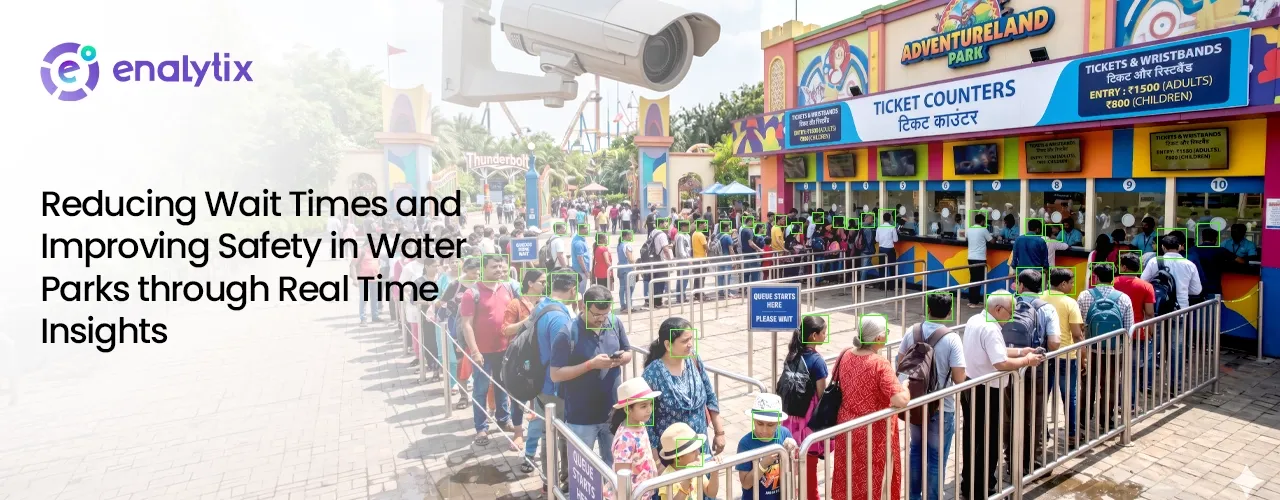
Using a Footfall counter and People counter, operators can track how visitor movement changes throughout the day.
This data becomes surprisingly useful.
Parks can identify:
- which rides attract peak traffic
- when queues increase fastest
- which attractions remain underutilized
- where additional staff may be needed
Sometimes even small operational adjustments reduce waiting time significantly.
And shorter queues usually mean happier visitors.
Identifying Unsafe Behavior in High Traffic Areas
Water parks naturally have risky areas.
Wet flooring, crowded pools, running children, sharp turns near slides — all of these require continuous attention.
The problem is that human staff cannot watch every corner at the same time.
This is where safety alerts help.
Using ai-powered video analytics, systems can identify unusual behavior patterns automatically.
For example:
- overcrowding near pool edges
- movement inside restricted areas
- sudden crowd surges
- unsafe behavior in busy walkways
Instead of depending completely on manual observation, operators receive alerts instantly when something unusual happens.
That extra response time helps prevent accidents before they escalate.
Using Data to Optimize Park Operations
One interesting thing about modern parks is how much operational data they generate every single day.
Most of it usually goes unused.
But with occupancy monitoring and intelligent tracking systems, parks can understand visitor behavior much more clearly.
They can study:
- peak operating hours
- attraction popularity
- average waiting time
- movement flow between rides
- areas where congestion happens repeatedly
This helps management improve staffing, attraction planning, and crowd distribution over time.
And honestly, smoother operations improve the visitor experience more than adding another ride sometimes.
Why Modern Parks Need Video Analytics
Water parks are becoming more crowded every year, especially during weekends, holidays, and summer seasons.
Managing all of that manually is becoming unrealistic.
That’s why many operators are adopting ai based video analytics solutions to improve visibility across attractions and high-traffic zones.
Instead of waiting for complaints or incidents, parks can now identify operational pressure while it’s still developing.
And that changes everything.
Because better crowd control doesn’t only improve safety.
It improves the overall experience people remember after leaving the park.
Leave a Reply