Category: News Room

This category is only for News

  • Reducing Wait Times and Improving Safety in Water Parks through Real Time Insights

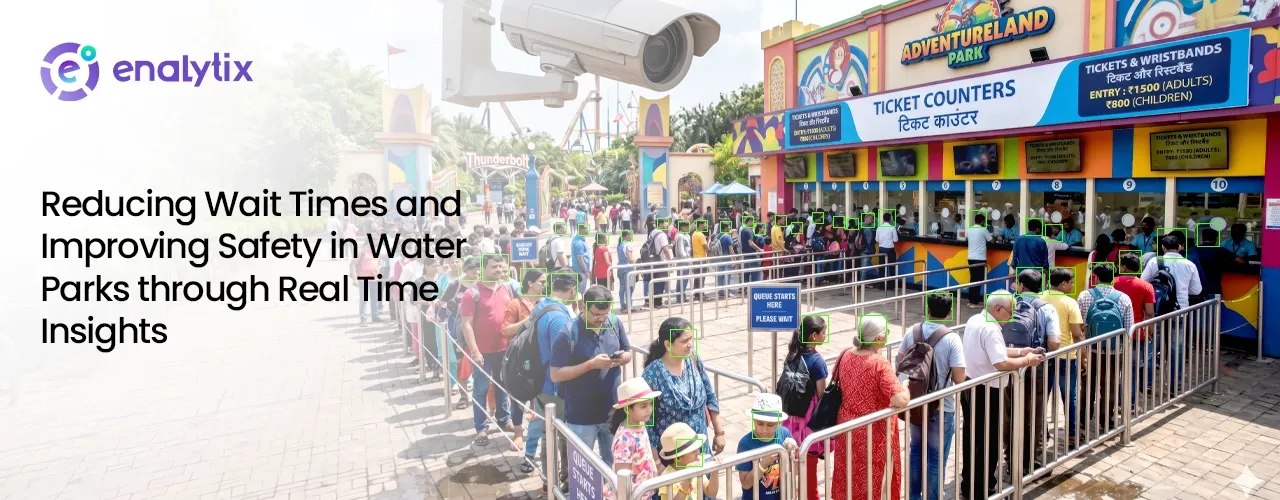
    Reducing Wait Times and Improving Safety in Water Parks through Real Time Insights

    Introduction


    Nobody likes standing in a long line under the sun waiting for a 60-second water ride.

    But during weekends or holidays, that’s exactly what happens in many water parks. Some rides stay overloaded for hours while other sections remain almost empty. Staff members try to manage people manually, but once the crowd increases, things become difficult very quickly.

    And honestly, crowd problems inside water parks are not only about customer frustration anymore. They directly affect safety too.

    A packed wave pool, slippery walkways, overcrowded ride entrances, children running through busy areas all of these situations become harder to control when visibility is limited.

    This is why many parks are quietly upgrading their operations with AI-powered video analytics.

    Not because cameras are new. Cameras have existed for years.

    The difference is that parks now want systems that can actually tell them what’s happening live instead of only recording footage for later review.

    Why Overcrowded Rides and Long Queues Are a Growing Problem

    Most visitors expect some waiting time. That’s normal.

    The real issue starts when queues become unpredictable.

    A ride that looked manageable ten minutes ago suddenly has 200 people standing outside it. Another attraction remains half empty because visitors don’t know where the shorter lines are.

    Operations teams usually notice these problems late because they’re depending on physical observation or radio communication from staff on the ground.

    And during peak hours, situations change very fast.

    Crowd pressure near rides also creates safety concerns. When too many people gather near entry gates or pool areas, movement becomes harder to manage. Small slips or panic situations can quickly affect large groups.

    This is why proper crowd monitoring has become more important than most park operators expected a few years ago.

    Key Challenges in Managing Crowd and Safety in Parks

    One thing that makes water parks difficult to manage is movement unpredictability.

    People don’t stay in one place. Families move between rides constantly. Teenagers gather near popular attractions. Children run between zones. Weather changes visitor behavior within minutes.

    For operations teams, this creates continuous pressure.

    Another challenge is limited visibility across large areas.

    Even with CCTV cameras installed everywhere, staff members still struggle to understand which zones actually need attention first.

    Common issues usually include:

    • overcrowded ride entrances
    • long unmanaged queues
    • slippery high-traffic areas
    • delayed response during peak hours
    • uneven crowd distribution across attractions

    Without proper occupancy monitoring, operators often react only after the situation becomes difficult.

    Limitations of Traditional Monitoring Systems

    Traditional CCTV systems were mainly designed for recording footage.

    That worked earlier because parks mostly used surveillance for security review purposes. But modern operations need something more practical.

    A person sitting in a control room cannot realistically monitor dozens of screens continuously and still notice every small issue happening across a crowded park.

    And honestly, most operational problems don’t begin as “major incidents.”

    They start small.

    A queue becomes slightly longer. A ride entrance becomes slightly crowded. Staff deployment becomes uneven for a few minutes.

    But small operational gaps slowly turn into bigger problems when nobody notices them early.

    That’s one reason many parks are moving toward ai based video analytics instead of relying only on manual supervision.

    Bringing Real Time Visibility with AI Video Analytics

    The biggest advantage of modern Video analytics software is visibility.

    Operators no longer need to guess what’s happening in different zones.

    The system continuously tracks movement patterns and provides live operational insights across attractions, pools, waiting areas, and walkways.

    For example, teams can instantly identify:

    • unusual crowd build-up
    • blocked pathways
    • overloaded rides
    • high-density pool areas
    • abnormal movement patterns

    This helps parks respond faster before visitors even begin complaining about the situation.

    And during busy weekends, faster response matters a lot more than people realize.

    Detecting and Managing Ride Crowd Overload

    Every water park has a few attractions that attract most visitors.

    The problem starts when crowd density near those rides becomes difficult to control manually.

    Earlier, staff usually depended on visual estimation. Someone would physically check the area and report if things looked overcrowded.

    But that approach isn’t always reliable during rush hours.

    With automated crowd alerts, systems can immediately identify when crowd levels cross safe limits near rides or waiting zones.

    That gives operations teams time to react properly.

    Sometimes the solution is simple — redirect visitors toward another attraction, temporarily slow entry, or deploy additional staff nearby.

    But without real-time crowd monitoring, those decisions usually happen too late.

    Reducing Queue Wait Times with Live Insights

    Visitors may forget small delays, but they always remember long waiting lines.

    That’s why queue management has become one of the biggest focus areas for modern parks.

    Using a Footfall counter and People counter, operators can track how visitor movement changes throughout the day.

    This data becomes surprisingly useful.

    Parks can identify:

    • which rides attract peak traffic
    • when queues increase fastest
    • which attractions remain underutilized
    • where additional staff may be needed

    Sometimes even small operational adjustments reduce waiting time significantly.

    And shorter queues usually mean happier visitors.

    Identifying Unsafe Behavior in High Traffic Areas

    Water parks naturally have risky areas.

    Wet flooring, crowded pools, running children, sharp turns near slides — all of these require continuous attention.

    The problem is that human staff cannot watch every corner at the same time.

    This is where safety alerts help.

    Using ai-powered video analytics, systems can identify unusual behavior patterns automatically.

    For example:

    • overcrowding near pool edges
    • movement inside restricted areas
    • sudden crowd surges
    • unsafe behavior in busy walkways

    Instead of depending completely on manual observation, operators receive alerts instantly when something unusual happens.

    That extra response time helps prevent accidents before they escalate.

    Using Data to Optimize Park Operations

    One interesting thing about modern parks is how much operational data they generate every single day.

    Most of it usually goes unused.

    But with occupancy monitoring and intelligent tracking systems, parks can understand visitor behavior much more clearly.

    They can study:

    • peak operating hours
    • attraction popularity
    • average waiting time
    • movement flow between rides
    • areas where congestion happens repeatedly

    This helps management improve staffing, attraction planning, and crowd distribution over time.

    And honestly, smoother operations improve the visitor experience more than adding another ride sometimes.

    Why Modern Parks Need Video Analytics

    Water parks are becoming more crowded every year, especially during weekends, holidays, and summer seasons.

    Managing all of that manually is becoming unrealistic.

    That’s why many operators are adopting ai based video analytics solutions to improve visibility across attractions and high-traffic zones.

    Instead of waiting for complaints or incidents, parks can now identify operational pressure while it’s still developing.

    And that changes everything.

    Because better crowd control doesn’t only improve safety.

    It improves the overall experience people remember after leaving the park.
  • AI Video Analytics for Detecting and Preventing Safety Risks in Public Spaces like Stations & Platforms

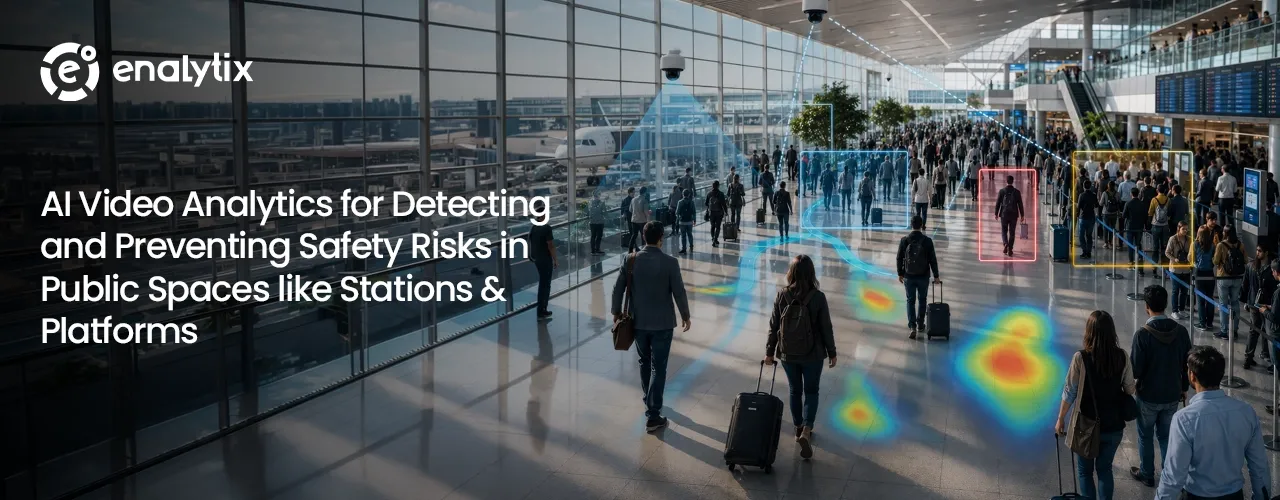
    AI Video Analytics for Detecting and Preventing Safety Risks in Public Spaces like Stations & Platforms

    Introduction

    Let’s be honest major railway stations and metro platforms are basically controlled chaos. Thousands of people, everyone in a rush, heavy trains moving inches away from the crowd. It’s a recipe for disaster. For years, we’ve relied on “dumb” CCTV. Cameras that just record. They don’t tell you a kid is too close to the edge; they just record the fall. That’s not safety; that’s just documentation of a tragedy.

    We need to flip the script. The shift to a video intelligence solution is about moving from “What happened?” to “Stop it from happening.” AI isn’t just a buzzword here; it’s the difference between a normal commute and a headline you never want to read.

    Detecting Overcrowding and Managing Passenger Flow on Platforms

    Overcrowding isn’t just a comfort issue. It’s a death trap. We’ve seen what happens when crowd exceeds a platform’s physical limit stampedes happen in seconds. Humans are bad at estimating crowd density in a crisis. We panic.

    Ai-powered video analytics doesn’t panic. It looks at the platform through a mathematical lens. By analyzing the “fill rate” of a specific zone, the system knows the exact moment the density hits a red line. Instead of waiting for a guard to notice, the AI triggers safety alerts. This allows the control room to shut down entry turnstiles or redirect the flow before the pressure becomes dangerous. It’s about managing people like a fluid, not a hurdle.

    Preventing Track Intrusion and Unauthorized Platform Access

    The “Yellow Line” is the most ignored safety feature in history. People lean over to see if the train is coming, or worse, they drop a phone and jump down to grab it. By the time a driver sees a person on the tracks, the laws of physics take over. A train can’t stop on a dime.

    This is where smart video analytics acts as an invisible shield. We set up “Forbidden Zones” in the software. If a human shape crosses that digital boundary, the system alerts the loco pilot and the platform marshals instantly. We’re talking about millisecond response times. This isn’t just surveillance; it’s a real-time intervention that saves lives every single day.

    Identifying Suspicious Activities and Security Threats in Real Time

    Public transport hubs are soft targets. It’s a sad reality. A human guard, no matter how well-trained, will eventually get “monitor fatigue.” They blink, they look away, they miss the guy loitering near the signal box for twenty minutes.

    Ai based video analytics never gets bored. It’s trained on behavioral anomalies. It recognizes the difference between someone waiting for a friend and someone “casing” a security gate. By using video analytics ai, we flag these behaviors early. Security doesn’t have to guess; they get a ping on their radio: “Suspicious behavior at Gate 4, Sector B.” It’s targeted, efficient, and proactive.

    AI-Based Detection of Unattended Bags and Potential Risks

    An unattended bag is a nightmare for station security. It usually triggers a massive, expensive evacuation because nobody knows if it’s a bomb or just someone’s forgotten gym gear.

    Modern AI powered video analytic systems use “Object Persistence” logic. The camera identifies a bag and “attaches” it to a person. If that person walks away and the bag stays for more than a set time, the camera analytics flags it. This allows security to check the footage, see exactly who left it, and determine the risk level in minutes. It keeps the station running while maintaining a high security bar.

    Reducing Platform Accidents with Smart Video Monitoring

    Most injuries at stations aren’t “movie-style” disasters. They are slips, trips, and falls. A spilled drink or a loose floor strip can lead to a broken hip or worse.

    Our video analytics software uses skeletal tracking. It knows what a “standing” human looks like versus a “fallen” one. If someone hits the ground, an alarm goes off. Why is this important? Because in a crowded station, a fallen person can be trampled or go unnoticed for vital minutes. AI ensures that the medical team is dispatched the second the person’s posture changes.

    Monitoring Escalators, Staircases, and Entry Gates for Passenger Safety

    Escalators are moving danger zones, especially for kids and the elderly. A shoelace gets caught, or someone loses their balance, and suddenly you have a pile-up.

    A video intelligence solution acts as a constant auditor of these choke points. If the “rhythm” of the escalator traffic breaks—say, people start bunching up at the bottom—the AI detects the bottleneck. It can even be integrated to slow down or stop the escalator automatically. It’s about building a safety net into the infrastructure itself.

    Real-Time Emergency Alerts for Falls, Fights, and Medical Incidents

    Fights on a platform aren’t just a nuisance; they can push someone onto the tracks. And medical emergencies, like a cardiac arrest, need a response in the “Golden Hour.”

    The ai-powered video analytics we deploy is trained for “Aggression Detection.” It recognizes the frantic movements of a physical altercation. Simultaneously, it looks for people who suddenly collapse. Instead of a guard finding a body ten minutes later, the system “pushes” the alert to the nearest responder. Technology should be a life-saver, and in these moments, it is.

    Improving Public Transport Safety with AI Video Analytics Systems

    At the end of the day, safety is a data problem. If you have the data, you can prevent the accident. By integrating Public Safety Solutions across the board, we create a 360-degree safety cocoon.

    From automatic number plate recognition at the parking lot to camera vehicle counting at the drop-off points, and finally the internal platform AI—everything is connected. We turn “dead” cameras into a thinking, breathing safety network. Don’t just watch your passengers; protect them with the best AI powered video analytic tools in the business. Enalytix is making “Zero-Accident” stations a reality.

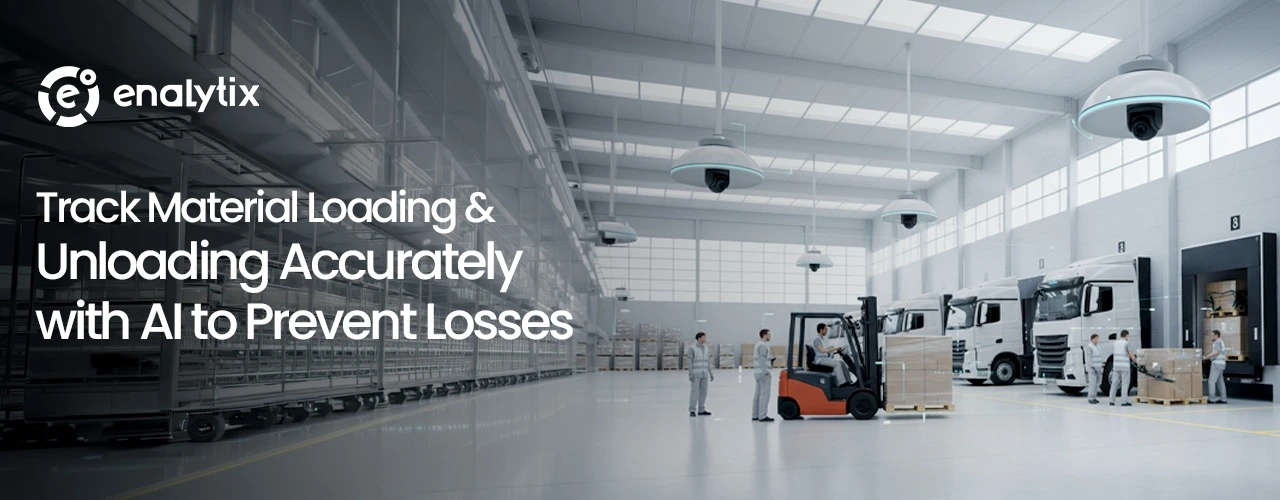
  • Track Material Loading & Unloading Accurately with AI to Prevent Losses

    Track Material Loading & Unloading Accurately with AI to Prevent Losses

    Introduction

    Let’s talk about the “Black Hole” of the supply chain: the loading dock. You shipped 500 cartons, but the receiver says they only got 480. Somewhere between the warehouse floor and the truck bed, 20 units vanished. Is it a counting error? Is it “internal shrinkage”? Or did the pallet just sit in a blind spot for three hours?

    In logistics, if you can’t see it, you can’t account for it. And if you can’t account for it, you’re losing money every single minute. Traditional tracking is reactive—you find out about the loss days later. But with ai-powered video analytics, we are moving from “What happened?” to “What is happening right now?”

    Why Accurate Material Loading & Unloading Tracking Matters

    Accuracy at the dock isn’t just about keeping the books clean; it’s about protecting your bottom line and your reputation. When loading and unloading data is fuzzy, the ripple effect is massive:

    1. Inventory Distortion: Your system thinks you have stock that isn’t actually there, leading to missed orders.
    2. Legal & Insurance Nightmares: Proving “Point of Loss” is nearly impossible without visual evidence.
    3. Operational Bottlenecks: Trucks idling at the dock because the “paperwork” doesn’t match the physical load.

    If you are handling high-value goods, even a 1% margin of error in video analytics tracking can translate into millions in annual losses. You need a system that doesn’t blink, doesn’t get tired, and doesn’t take shortcuts.

    Common Challenges in Manual Material Tracking Systems

    The “Clipboard and Pen” era should have ended a decade ago, yet many warehouses still rely on manual tallies. Why is this a recipe for disaster?

    • The “Human Factor”: It’s 2 AM, it’s raining, and the supervisor is tired. Miscounts are inevitable.
    • The Blind Spot Problem: Standard CCTV just records hours of “dead footage.” Finding a specific 10-second clip of a pallet being misplaced is like finding a needle in a haystack.
    • Lack of Real-Time Validation: Manual systems tell you there’s a problem after the truck has already left the gates. By then, the trail is cold.
    • Collusion Risks: Unfortunately, manual logs can be altered. Without an objective ai based video analytics observer, your data is only as good as the person writing it down.

    How AI Video Analytics Improves Loading & Unloading Accuracy

    This is where ai Video analytics changes the game. Instead of just “filming” the dock, the AI “interprets” the movement.

    A high-end video intelligence solution uses object detection to identify pallets, boxes, and even individual SKUs. As the forklift moves, the AI counts the units in real-time. It compares the “Physical Count” against the “Digital Manifest.” If the manifest says 50 boxes and the camera only sees 48, a smart video analytics alert is sent to the floor manager’s phone before the truck door is closed.

    Moreover, camera analytics can track “Time-to-Load.” If a truck is taking 40% longer than the average, the system flags it as an inefficiency, allowing you to investigate if it’s a mechanical issue or a labor bottleneck.

    Key Benefits of AI-Based Material Monitoring Systems

    When you upgrade to a professional Video Analytics Software, you aren’t just buying cameras; you’re buying peace of mind.

    1. 100% Visual Audit Trail: Every pallet has a “Digital Fingerprint.” You can pull up the exact moment of loading in seconds.
    2. Drastic Reduction in Shrinkage: When workers know that a smart video analytics system is cross-checking every move, “accidental” losses drop by nearly 80%.
    3. Automated Documentation: The AI can take a “Snapshot” of the loaded truck, providing proof of condition and quantity for insurance purposes.
    4. Seamless Integration: Modern ai powered video analytic tools plug right into your existing WMS (Warehouse Management System).

    How Enalytix Prevents Losses with Real-Time Tracking

    At Enalytix, we don’t believe in “General AI.” We believe in Warehouse Intelligence. Our Real-Time Tracking solution is specifically trained to recognize logistics patterns.

    Whether you need a focused ai Video analytics setup for a small distribution center or an enterprise-grade AI powered video analytic network for a global supply chain, we deliver the precision you need. We help you eliminate the “He Said, She Said” disputes at the loading dock.

    With Enalytix, you get a video analytics dashboard that highlights discrepancies as they happen. We turn your existing cameras into a high-speed counting and auditing machine. Don’t let your profits leak out of the loading dock—secure your perimeter with the most advanced ai-powered video analytics in the industry.

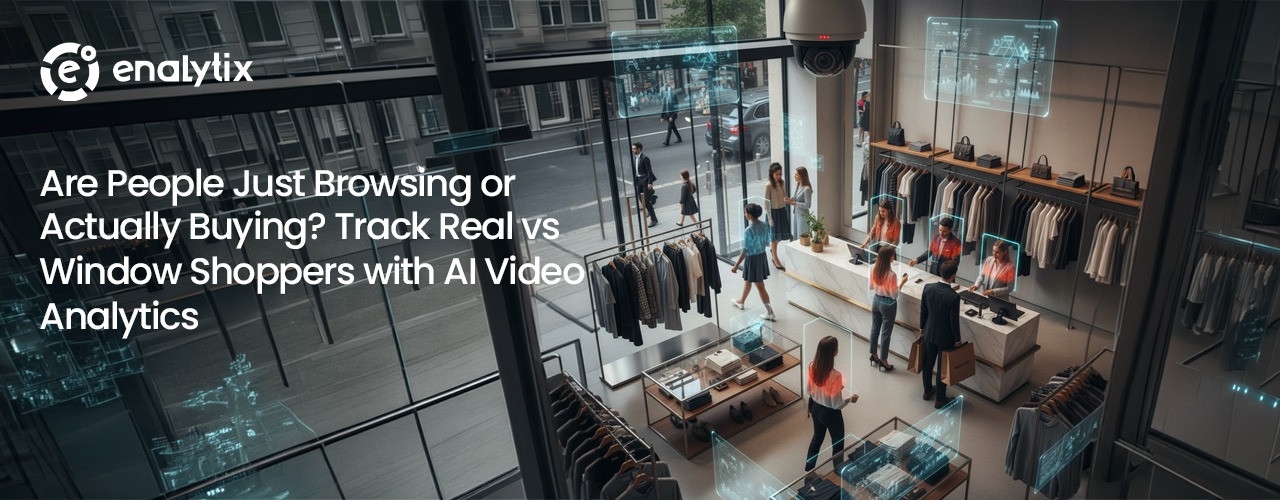
  • Are People Just Browsing or Actually Buying? Track Real vs Window Shoppers with AI Video Analytics

    Are People Just Browsing or Actually Buying? Track Real vs Window Shoppers with AI Video Analytics

    Introduction

    Let’s be honest for a second. If you walk into any high-end retail store during a weekend, it looks like a goldmine. The aisles are packed, people are picking up hangers, and the energy is high. But at the end of the day, when you look at the sales report, the numbers don’t match the crowd. This is the classic “Retail Paradox.” A busy store doesn’t always mean a profitable one.

    In the industry, we call this the Window Shopping Trap. You have a high footfall, but your conversion rate is lagging. The real challenge for any modern retailer is distinguishing between a “Browser” (someone just killing time) and a “Buyer” (someone with a high intent to purchase). Without this distinction, your staff is essentially shooting in the dark.

    Why Identifying Real Buyers vs Window Shoppers Matters

    In a fast-paced retail environment, your sales associates are your most valuable resource. If they spend twenty minutes explaining the features of a premium watch to a “window shopper” who has zero intention of buying, they might miss a quiet “high-intent buyer” waiting in the next aisle.

    Identifying intent is about Resource Optimization. When you can segment your audience in real-time, you can:

    1. Prioritize High-Value Leads: Focus on customers showing “Buying Signals.”
    2. Improve Staff Efficiency: Deploy more people where the “serious” browsing is happening.
    3. Reduce Floor Friction: Identify if a real buyer is leaving because they weren’t attended to.

    If you don’t know who is who, you are leaving money on the table. It’s that simple.

    Challenges in Tracking Customer Intent Without AI

    The old-school way of tracking intent was purely anecdotal. A store manager would stand at the entrance with a manual clicker, or security would glance at the monitors. But let’s face it—humans are biased, they get tired, and they certainly can’t track the micro-movements of fifty people simultaneously.

    • The “Group” Problem: Traditional sensors often count a family of four as four separate leads, which completely ruins your conversion data.
    • Lack of Context: A basic motion sensor can tell you someone entered, but it can’t tell you if they spent ten minutes staring at the “New Arrivals” or just walked straight to the washroom.
    • Zero Real-Time Action: Manual data is usually analyzed after the day is over. By then, the “lost customer” is already gone.

    Without Smart Video Analytics, you are operating on “gut feeling” rather than “hard facts.”

    How AI Video Analytics Identifies Browsers vs Buyers

    This is where the magic of ai-powered video analytics comes into play. Modern software doesn’t just “see” a person; it “understands” their behavior through pattern recognition.

    An ai based video analytics system tracks “skeletal movements” and “path navigation.” A window shopper usually has a high velocity—they walk fast, their eyes wander across the whole store, and they rarely stay in one spot for more than 30 seconds.

    On the other hand, a “Buyer” exhibits what we call High-Engagement Pathing. They stop. They lean in to look at a price tag. They touch the fabric. Their dwell time in a specific “hot zone” (like the premium collection) increases significantly. Our video analytics software detects these behavioral cues and can instantly alert a floor manager’s handheld device: “High-intent shopper in Zone B—unattended for 3 minutes.” This is the difference between a missed opportunity and a closed sale.

    Key Metrics to Measure Customer Intent in Retail

    If you want to move beyond basic footfall and master video intelligence solution strategies, you need to track these four pillars:

    1. Zone-Specific Dwell Time: It’s not about how long they are in the store; it’s about how long they spend at the shelf.
    2. Product Interaction Rate: Using camera analytics, you can measure how many people actually touched a product versus just looking at it from a distance.
    3. Recurrence Tracking: Is this a “new” browser or a “returning” high-intent customer who came back to check the same item for the second time?
    4. Staff Attribution: Did the customer’s intent increase after a staff member approached them, or did they walk away? AI Video analytics gives you this level of granular detail.

    How Enalytix Helps Convert Browsers into Buyers

    At Enalytix, we don’t just sell software; we provide a “Digital Brain” for your retail space. We understand that every store has its own unique “flow.” Our AI Video Analytics platform is designed to integrate seamlessly with your existing CCTV infrastructure, turning passive recording into active business intelligence.

    Whether you are looking for a focused ai Video analytics setup for a single luxury boutique or a massive AI powered video analytic network for a multi-story department store, we scale with you. Our smart video analytics dashboard is incredibly intuitive—you don’t need to be a data scientist to read it. It tells you exactly where your “dead zones” are and why people are leaving without buying.

    Real-World Use Case: Converting the “Undecided”

    Imagine a scenario in a high-end electronics store. The data shows that many people are spending 15+ minutes in the “Gaming Laptop” section but leaving without a purchase. Using ai-powered video analytics, the manager realizes that the “Spec Sheet” on the display is too technical and confusing.

    By simply changing the signage to be more “human-friendly” and placing a specialist staff member in that zone during peak “browsing hours” (identified by the software), the store sees a 20% jump in conversions. This isn’t magic; it’s just the power of knowing exactly what is happening on your floor.

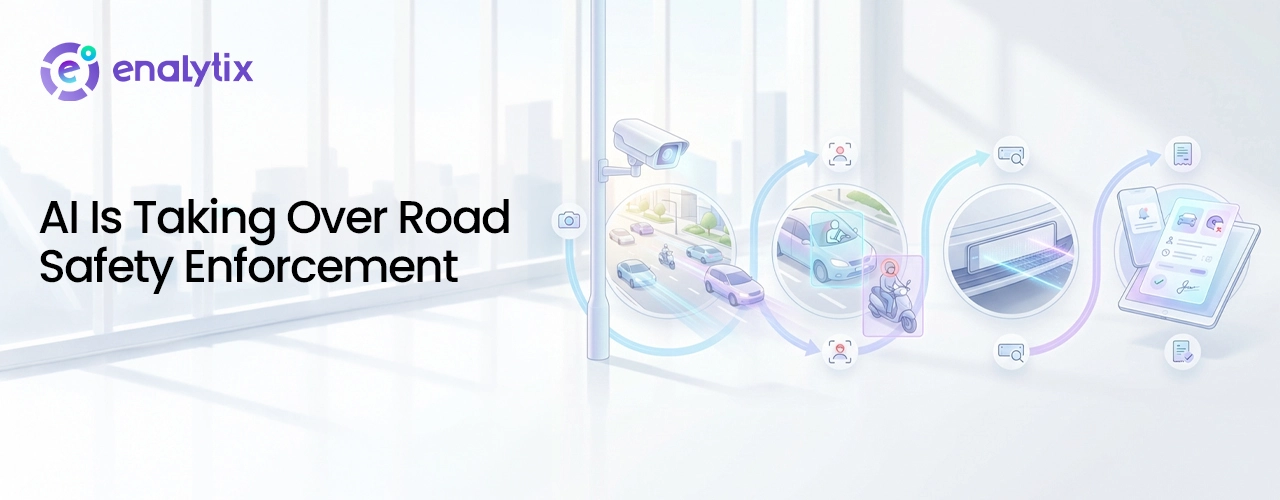
  • How AI is Replacing Manual Helmet and Seatbelt Checks on Roads

    How AI is Replacing Manual Helmet and Seatbelt Checks on Roads

    Introduction

    Let’s be blunt: road safety shouldn’t be a game of hide-and-seek. We’ve all seen it, the moment a biker spots a traffic cop, they quickly pull a helmet out of their bag or the driver suddenly clicks their seatbelt into place. Manual enforcement is a “reactive” game, and it’s one that authorities are losing. When human lives are on the line, relying on a whistle and a handheld stop sign isn’t just outdated; it’s dangerous.

    The shift toward automation isn’t about replacing traffic police; it’s about giving them “Super Vision.” By integrating automatic number plate recognition software with real-time detection, we are moving toward a world where safety rules are followed because the system never blinks.

    Why Manual Helmet and Seatbelt Checks Are Inefficient

    Manual checks are fundamentally flawed because they depend on physical presence. A traffic officer can only monitor one lane, one vehicle, and one violation at a time. If a cop is busy fining a car for a red-light jump, three bikers without helmets might zip past in the next lane.

    The inefficiency boils down to three things:

    1. Low Coverage: You can’t put an officer every 100 meters.
    2. Human Fatigue: Checking 1,000 cars for seatbelts in a 40°C heatwave is a recipe for oversight.
    3. Safety Risks: Asking an officer to step into moving traffic to stop a violator puts the officer’s life at risk.

    Manual enforcement is a “sample-based” system—you catch 5% of violators and hope the other 95% get the message. That is not a deterrent; that’s a gamble.

    Challenges in Traditional Traffic Rule Enforcement

    Before the rise of automatic number plate recognition, enforcement was a paperwork nightmare. Even if an officer caught a violation, the process of stopping the vehicle, verifying documents, and issuing a physical challan created massive traffic bottlenecks.

    • The “Escapist” Problem: In high-speed corridors, stopping a vehicle safely is nearly impossible.
    • Lack of Evidence: Without a high-resolution visual trail, many violators contest their fines, leading to legal delays.
    • Limited Data: Traditional methods don’t provide a “Big Picture.” They don’t tell you how many people are breaking rules vs. how many are following them.

    Without Traffic Intelligence, authorities are essentially guessing where the most dangerous spots on the road are.

    How AI Detects Helmet and Seatbelt Violations in Real Time

    This is where the technology gets fascinating. Modern Automatic Number Plate Recognition (ANPR) systems are now paired with deep-learning “Vision Models.”

    The AI is trained on millions of images to recognize the “shape” of a helmet and the “line” of a seatbelt across a chest. Here’s how the process works in milliseconds:

    1. Detection: The camera identifies a vehicle.
    2. Analysis: The AI scans the rider’s head (for helmets) and the driver’s shoulder/chest (for seatbelts).
    3. Validation: If a violation is found, the automatic number plate recognition software instantly captures the license plate.
    4. Action: A high-definition “Violation Proof” is generated, and a digital e-challan is triggered without a single human intervention.

    Even in low-light or high-speed conditions, these systems maintain a level of accuracy that a human eye simply cannot match.

    Key Benefits of AI-Based Traffic Monitoring Systems

    When a city switches to an AI-driven model, the impact is almost immediate:

    • 24/7 Enforcement: The system doesn’t take lunch breaks or sleep. It enforces rules during the most dangerous hours—midnight to dawn.
    • Unbiased Monitoring: AI doesn’t care who is driving. It treats every citizen equally, eliminating “influence-based” escapes.
    • Camera Vehicle Counting: Beyond just fines, the system provides Camera Vehicle Counting data, helping city planners understand traffic density and peak hours.
    • Revenue Integrity: Digital challans ensure that the fines go directly to the government treasury, reducing on-road corruption.

    By using Automatic Number Plate Recognition, cities can ensure that every single violator is held accountable, creating a massive psychological deterrent for the general public.

    How Enalytix Improves Road Safety with Automated Detection

    At Enalytix, we don’t just provide cameras; we provide a comprehensive Road Safety Ecosystem. Our AI models are specifically tuned for diverse road conditions—from dusty highways to congested urban intersections.

    Our automatic number plate recognition software is designed to work with your existing ITMS (Intelligent Traffic Management System). We provide more than just “violation alerts.” Our dashboard offers Camera Vehicle Counting insights that help authorities predict where accidents are likely to happen based on historical behavior patterns.

    Whether it’s a biker weaving through traffic without a helmet or a driver ignoring their seatbelt on a highway, Enalytix ensures that the violation is logged, the plate is recognized, and the safety protocol is upheld. We turn passive cameras into active life-savers. Stop relying on luck and start relying on the precision of Automatic Number Plate Recognition.

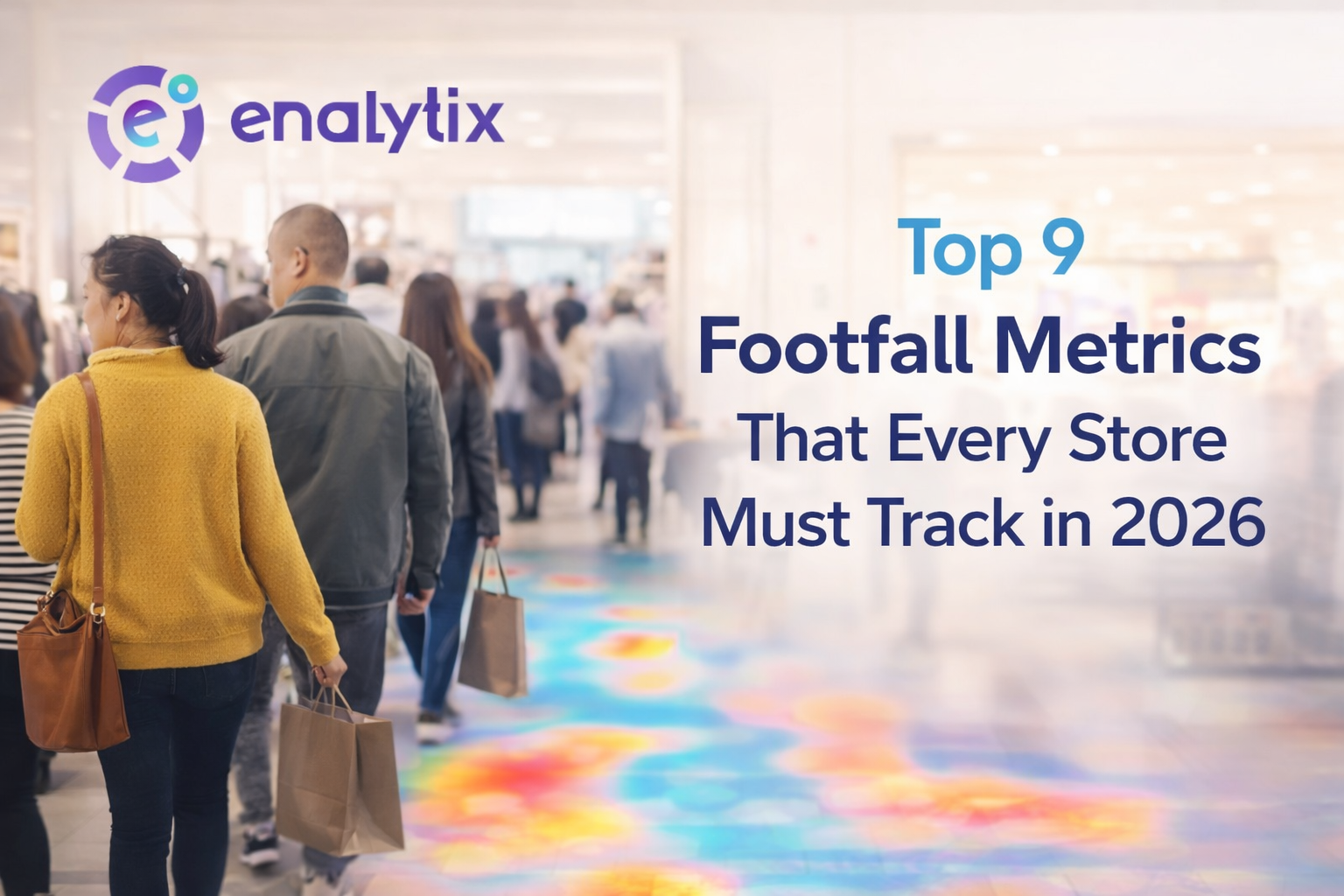
  • Top 9 Footfall Metrics That Every Store Must Track in 2026–2027

    Top 9 Footfall Metrics That Every Store Must Track in 2026–2027

    Introduction

    Retail isn’t just about selling products anymore; it’s about mastering the “science of movement.” If you are running a physical store in 2026 and your only metric for success is the total sales at the end of the day, you are leaving money on the table.

    In this guide, we’ll dive into the high-level analytics that separate market leaders from struggling retailers.

    Why Basic Footfall Numbers are Insufficient

    Gone are the days when a simple clicker or a basic infrared beam at the door was enough. Traditional data tells you how many people entered, but it stays silent on who they were and why they left.

    In the 2026–2027 retail landscape, relying on raw numbers is a recipe for failure. If your footfall counter doesn’t distinguish between a delivery boy and a high-spending customer, your conversion data is flawed. To thrive, you need context, not just digits.

    Modern Footfall and Behaviour Metrics: An Overview

    Modern retail intelligence has shifted from “counting heads” to “analyzing intent.” By leveraging advanced AI video analytics, stores can now map out the entire customer journey. This isn’t just about surveillance; it’s about creating a frictionless shopping environment. Let’s look at the 9 pillars of modern store metrics.

    1. Unique Customer Walk-ins

    Accuracy over Inflation Raw data often gets skewed by staff movements, security guards, or customers wandering in and out.

    Filtering the Noise for Precision: A high-quality people counter today uses AI to filter out non-customers. Tracking “Unique Walk-ins” ensures your conversion rates are calculated against actual potential buyers, giving you a crystal-clear picture of your store’s true performance.

    2. Customer Demographics

    Knowing the ‘Who’ Behind the Walk-in Personalization is the biggest trend of 2026. You cannot personalize if you don’t know who is walking through your doors.

    Segmenting by Age and Gender: Are you attracting Gen Z trendsetters or suburban families? Tracking demographics allows you to align your window displays and in-store inventory with the people actually visiting your space.

    3. Occupancy Analytics

    Managing the Flow in Real-Time How many people are in your store right now? This is no longer just a safety requirement; it’s a tool for operational efficiency.

    Optimizing the Store Atmosphere: Using an integrated footfall counting machine, managers can monitor real-time density. If the store is too crowded, customer comfort drops; if it’s too empty, energy levels dip. Maintaining the “sweet spot” of occupancy is key to a premium experience.

    4. Dwell Time & Heatmaps

    Understanding “Store Real Estate” Value Where do people stop? Where do they linger? And which areas do they ignore completely?

    Identifying Hot Zones and Dead Spots: Heatmaps reveal the most attractive parts of your store. By analyzing dwell time, you can determine if a product is “engaging” or just “distracting.” If customers spend 10 minutes in an aisle but don’t buy anything, you have a pricing or variety problem.

    5. Abandoned Rate

    The Silent Killer of Revenue This is perhaps the most painful metric: the percentage of people who entered with intent but left empty-handed.

    Solving the Mystery of the ‘Non-Buyer’: High footfall with a high abandoned rate usually points to friction long trial room queues, poor lighting, or unhelpful staff. Tracking this allows you to fix the leak in your sales funnel.

    6. VIP / Loyal Customer Detection

    Recognizing Value the Moment it Enters Your top 10% of customers often drive 50% of your revenue. Identifying them instantly is a game-changer.

    Real-time Recognition for Premium Service: Modern people counting sensor technology can be integrated with loyalty programs. When a VIP enters, staff can be alerted to provide a personalized greeting, turning a standard shopping trip into a luxury experience.

    7. POS Queue Management

    Winning the Battle at the Finish Line Nothing kills a sale faster than a long, stagnant line at the billing counter.

    Predictive Staffing for Faster Checkouts: By tracking how many people are heading toward the registers, you can open new counters before the queue even forms. Reducing wait times is the fastest way to improve customer satisfaction scores.

    8. Evidence-based Store Feedback

    Moving Beyond the Suggestion Box Manual feedback forms are outdated and often biased. You need objective data.

    Behavioral Proof over Opinions: By observing how customers interact with displays through video analytics, you get “honest” feedback. If 80% of people touch a product but put it back, the “evidence” suggests the price point might be the barrier.

    9. Unattended Customer Alerts

    Never Miss an Opportunity to Connect A customer standing alone for too long in a high-value zone (like electronics or jewelry) is a lost sale waiting to happen.

    Boosting Conversions through Proactive Service: Smart systems can trigger an alert to floor staff when a customer has been “unattended” for more than 120 seconds. This ensures that every high-intent shopper gets the help they need to make a decision.

    Conclusion

    As we move through 2026 and into 2027, the gap between “smart stores” and “traditional stores” will widen. Simply installing a footfall counter is the bare minimum; the real victory lies in how you interpret the data from your people counting sensor to improve the human experience.

    Data-driven retail isn’t about replacing humans with machines, it’s about using machines to help humans serve customers better.

  • AI Video Analytics for Jewellery Stores: Preventing High-Value Theft

    AI Video Analytics for Jewellery Stores: Preventing High-Value Theft

    Introduction

    Jewellery stores have always been a prime target for high-stakes heists and subtle “smash-and-grab” incidents. For a store owner, the loss isn’t just the physical gold or diamonds it’s the blow to the brand’s reputation and the soaring insurance premiums that follow. Traditional security cameras have been around for decades, but they’ve mostly served as a way to watch a robbery after it happened.

    That’s changing. AI-driven video analytics is turning passive CCTV into a proactive defense system. By “understanding” what it sees in real-time, AI can spot a threat before the glass even breaks. For the jewellery industry, this is the ultimate safeguard.

    Detects suspicious loitering and unusual hand movements

    In a high-end showroom, “casing the joint” is usually the first step for a professional thief. They might loiter near the entrance or spend an unusual amount of time at a specific high-value counter without interacting with staff. AI is trained to recognize these “pre-incident” behaviors.

    More importantly, it can track “sleight of hand” movements. If someone tries to swap a real ring for a cubic zirconia while the salesperson is distracted, the AI which never blinks can detect the unnatural hand motion and trigger a silent alert. It provides an extra set of eyes that are specifically trained to catch what the human eye often misses during a busy sale.

    Alerts when items are removed from counters

    The moment a high-value piece leaves its designated tray or display area, the clock starts ticking. AI analytics allows you to create “virtual zones” around your display counters. If an item is moved outside of a pre-defined safety boundary, the system instantly flags it.

    This is particularly effective during busy festival seasons or exhibitions when the store is crowded. It ensures that every piece of inventory is digitally tethered to its location. If a tray is removed or an item is palmed, the manager gets a notification on their device immediately, allowing for a discreet check before the person leaves the premises.

    Identifies blacklisted individuals instantly

    Professional shoplifting rings often hit multiple stores in the same district. AI-powered facial recognition allows jewellery brands to maintain a shared “blacklist” of known offenders.

    The second a person associated with past thefts or “grab-and-run” incidents walks through your door, the system cross-references their face with the database and pings security. This “early warning” gives your staff the chance to provide “extra-attentive” service (which deters the thief) or to call for backup before any attempt is made.

    AI Video Analytics for Jewellery Stores: Preventing High-Value Theft

    Monitors staff-customer interactions

    Security isn’t just about catching “bad guys”; it’s also about maintaining the highest standards of professional conduct. AI can analyze the flow of interaction between your staff and customers. It can detect if a salesperson is following the standard safety protocols like only showing two items at a time or keeping the display case locked when not in use.

    By monitoring these patterns, store owners can identify gaps in training that might lead to security vulnerabilities. It’s a tool for quality control that doubling as a security layer, ensuring that the “human element” of your store remains its strongest link, not its weakest.

    Prevents insider theft and after-hours activity

    It’s a hard truth, but a significant portion of jewellery “shrinkage” comes from the inside. AI video analytics is the perfect deterrent for internal theft. It monitors staff activity around vaults and safes, flagging any unauthorized access or unusual behavior during closing hours.

    Furthermore, if there is any movement in the store after-hours, AI can distinguish between a security guard on patrol and an intruder. It can even detect smoke or “vibration” (from a drill or hammer), triggering an immediate emergency response. This 24/7 “intelligent” watch ensures that the store is protected even when the lights are off.

    Sends instant alerts to store managers

    In the jewellery business, a delay of 30 seconds can be the difference between a caught thief and a lost fortune. Traditional alarms are often too loud (causing panic) or too slow. AI-driven alerts are surgical.

    Direct notifications are sent to the manager’s smartphone or a smartwatch, complete with a live video clip of the incident. This allows for a “silent” response security can lock the doors or notify the police without alerting the suspect, increasing the chances of a successful apprehension without putting other customers at risk.

    Reduces shrinkage and insurance risks

    At the end of the year, the “bottom line” is what matters. Every piece lost to theft is a direct hit to your profit. By implementing AI In-Store analytics, stores can drastically reduce their “shrinkage” (unaccounted-loss of inventory).

    Beyond that, insurance companies are now looking favorably at stores that use proactive AI security. By showing that you have a system that prevents crime rather than just recording it, you can negotiate better premiums. It turns your security system from a “cost center” into a “savings center,” providing a high Return on Investment (ROI) while giving you peace of mind.

    Conclusion

    For jewellery retailers, the margin for error is zero. You cannot afford to be reactive when dealing with high-value assets. AI video analytics provides the sophisticated, multi-layered defense that modern luxury retail demands. By combining behavioral analysis, instant alerts, and internal monitoring, you create a store environment where safety is woven into the very fabric of the shopping experience.