Introduction
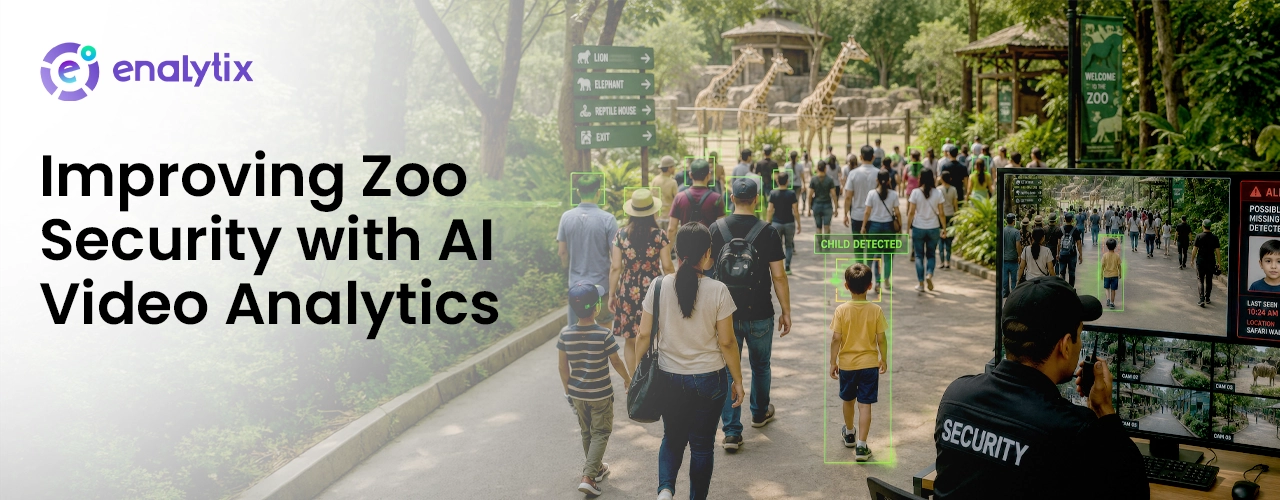
Let’s be honest about managing a zoological park. It is a massive footprint to cover. Open-air enclosures, acres of wooded trails, wild animals, and thousands of distracted tourists walking around with cameras. Most zoos think they are safe because they have a central room full of CCTV monitors. But that is just a checklist item. Traditional cameras don’t look for risks; they just record the incident. If a visitor climbs a barrier or an animal slips out, you only find out after someone screams. That is passive logging, not safety.
We need to fix this. Shifting to ai-powered video analytics isn’t about adding more screens. It’s about giving your existing grid a digital brain to flag anomalies before they turn into an operational crisis.
Why Zoos Need AI-Powered Video Analytics for Modern Operations
Human operators have a biological ceiling. Staring at a wall of 100 live camera feeds during a busy weekend shift is an impossible task. Within forty-five minutes, the eyes tire, shadows blend together, and critical movements get missed. It isn’t a training issue; it’s human fatigue.
Relying on a guard to spot a boundary breach in real-time is a gamble. Integrating smart video analytics into your park operations removes this element of luck. The software scans every single zone across all feeds simultaneously, 24/7. It provides an objective layer of tracking that doesn’t get distracted by a text message or a long shift.
Enhancing Zoo Security with Smart Video Analytics
Standard motion sensors fail in a zoo environment. Trees sway, birds fly across lenses, and stray rodents trigger false alarms constantly. Eventually, operators start ignoring the pings because 99% of them are noise.
Advanced smart video analytics solves this through precise object classification. The system understands the difference between a falling leaf and a human shape entering a restricted holding bay. By filtering out the environmental noise, your security team stops chasing ghosts. They only deploy when the AI flags a genuine, verified perimeter breach.
Using Camera Analytics to Monitor Animal Enclosures Effectively
The safety railing around a high-risk enclosure is a strict boundary, but visitors ignore it constantly. People lean over for selfies, drop personal items, or set their kids on top of the walls for a better view.
By applying camera analytics to the enclosure feeds, you can create invisible, non-negotiable safety zones:
- Buffer Zone Intrusion: The software automatically flags if a person steps off the pedestrian path into the stand-off area.
- Barrier Proximity: It counts the seconds a human shape remains stationary on top of a protective fence line.
- Proactive Warning: It pings the nearest floor marshal before the person actually drops or climbs inside, turning a potential disaster into a quick verbal correction.
Real-Time Safety Alerts for Visitors, Staff, and Animals
When a crisis happens on a 50-acre property, communication delays are your biggest enemy. If an altercation occurs at a crowded food court or a handler faces a lock-in issue, relying on someone to make a radio call takes too long.
Our system tracks physical disruptions like active fights or sudden crowd surges based on pure structural movement data. The moment a physical conflict or a barrier breach is detected, the platform triggers immediate safety alerts. These bypass the slow, traditional chain of command and hit the smartphones of the closest response rangers instantly, complete with exact coordinates.
How Fall Detection Systems Improve Emergency Response in Zoos
Uneven stone paths, wet boardwalks, and steep steps near aquatic exhibits are major trip hazards. In a sprawling park, if an elderly visitor or a lone staff member falls on a secluded trail, they could lie there for an hour before being found.
This is where a dedicated fall detection algorithm becomes vital. It tracks human posture in 3D space. The second a person’s skeletal frame drops from vertical to horizontal and stays down, the AI registers a fall. An automated alert goes to the medical desk immediately. Slashing the discovery time down to seconds is critical for handling heatstrokes or sudden cardiac arrests on hot summer days.
Real-World Use Case: The Maintenance Moat Fall
Imagine a keeper working near an open enclosure moat during off-hours. They lose their footing and fall down the concrete incline, landing out of the direct sight of main paths. The fall detection software captures the sudden downward momentum and the prone posture within milliseconds. It bypasses the need for a manual check-in, routes an emergency notification to the rescue crew, and ensures the injured worker is pulled out safely.
AI Video Analytics for Better Animal Behavior Monitoring and Care
Wildlife safety goes beyond visitor gates. Animals are experts at hiding symptoms of injury or stress when human handlers walk into their enclosures. It’s a basic survival instinct.
Continuous tracking via camera analytics allows veterinary teams to monitor animal behavior without creating human stress:
- Stereotypic Pacing: Automatically logs if an animal starts repetitive, compulsive movement loops that indicate stress.
- Resource Guarding: Tracks if a specific animal is being bullied or blocked from food troughs by dominant group members.
- Maternity Support: Provides zero-disturbance monitoring for pregnant or newborn animals, ensuring they are resting safely without needing constant, intrusive physical checks.
Future of Zoo Management with Intelligent Surveillance Solutions
The era of isolated security setups is over. Modern facility management is about connecting your camera analytics directly into your public information systems.
The future of smart zoos involves linking an ai-powered video analytics framework directly with digital park signage. If the primate exhibit hits peak capacity, the system automatically updates the entry billboards with current wait times and suggests alternative, less-congested paths across the park. This kind of data-driven coordination doesn’t just keep people safe; it optimizes the entire visitor experience. Enalytix turns passive CCTV feeds into an active, thinking safety asset, ensuring your park runs seamlessly at the speed of data.
Leave a Reply