Category: Blogs

This category is only for blogs.

  • How Number Plate Recognition Is Powering Smarter Parking Across India

    How Number Plate Recognition Is Powering Smarter Parking Across India

    Introduction


    Let’s be completely realistic about managing a major corporate tech park or a commercial shopping mall parking lot in India during peak morning rush hours. You have a massive queue of vehicles spilling onto the main road, security staff scrambling to check physical decals, and manual logging slowing down entry to a crawl. In the middle of this gridlock, unauthorized vehicles easily slip right through because a manual monitor got distracted by a tailgating car or a heated argument at the barrier gate.

    This is the classic illusion of perimeter control. Just because you have physical guards and boom barriers doesn’t mean your entry management is truly secure or efficient. Traditional manual tracking creates an immediate bottleneck where facility operations are forced to compromise: you either sacrifice speed for rigorous checks or sacrifice security to clear the traffic spillback.

    Moving away from legacy security theater demands a data-driven approach. Integrating targeted ai in security networks directly at your ingress and egress lines changes the entire framework. It transitions a parking asset from a passive space into an automated gate management ecosystem that processes vehicular access efficiently long before a car reaches a complete dead stop.

    What Automatic Number Plate Recognition Actually Does

    Don’t mistake basic digital photography or standard video recording for true automated enforcement. A conventional surveillance setup merely captures video frames of a passing vehicle, leaving it up to a human eye to log the letters or search through hours of dead footage during an audit.

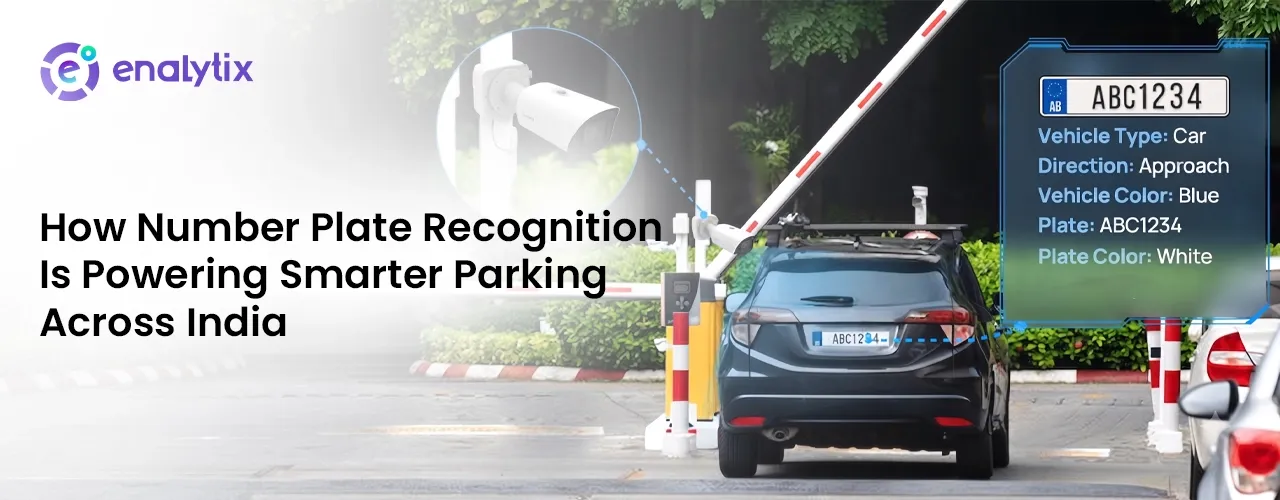
    An advanced Automatic Number Plate Recognition (ANPR) architecture works entirely behind the scenes to create a real-time tracking loop:

    • It identifies an approaching vehicle footprint as it hits the scanning boundary.
    • It extracts the alphanumeric text directly from the license plate using specialized optical character recognition (OCR) engines.
    • It translates that visual frame data into a light, encrypted alphanumeric text string within milliseconds.
    • It cross-references that string against your centralized employee or vendor database to instantly authorize or block access.

    This continuous digital process allows entry checkpoints to operate seamlessly without requiring an employee to roll down their window in monsoon rain or fumble around looking for a physical access card.

    Use Cases Beyond Highway Tolling

    While fast-tag networks have made plate reading a standard feature on national highways, the application of this technology has quietly shifted inward toward urban business infrastructure. Modern logistics facilities, enterprise zones, and multi-tenant commercial real estate use plate logging to streamline daily operations.

    For instance, high-volume retail hubs use ANPR systems to automate parking validation structures, track customer peak visit hours, and identify VIP or recurring shoppers the moment they cross the outer gate lines. Similarly, multi-national logistics and distribution yards layer this technology over their warehouse management workflows. By tracking arrival times automatically, supply chain managers can monitor exact vehicle turnaround times and identify loading bay delays without forcing delivery drivers to manage slow paper manifests at the gate.

    ANPR for Campus and Corporate Park Access Control

    The biggest operational hurdle for enterprise campuses is handling massive transit surges within limited, specific hour windows. Relying on physical identity cards or RFID tags requires significant capital expenditure on individual distribution, tracking lost passes, and managing physical hardware wear and tear.

    Transitioning to advanced ai video surveillance loops completely removes physical tokens from corporate entry management. As a registered car approaches the gate, the camera captures the plate data from up to ten meters away and communicates directly with the gate mechanics.

    By eliminating the manual “card-tapping” pause, you maximize entry velocity and prevent the entry lanes from clogging local roads. Furthermore, this provides enterprise teams with a reliable, unalterable digital footprint of all vehicular assets on the property, creating a clean audit trail that integrates effortlessly into workplace attendance or guest management software.

    Accuracy Challenges with Indian Plates and Lighting

    Deploying a global tracking algorithm directly into the Indian landscape presents unique localized hurdles. Indian roads are a chaotic mix of varying license plate styles—ranging from standard high-security registration plates (HSRP) to regional fonts, customized letter sizes, and non-reflective retro plates covered in dust.

    Relying on an unoptimized, off-the-shelf system will quickly lead to massive false rejection rates, especially during lighting shifts. Standard camera lenses get entirely blinded by oncoming high-beam headlights at night or suffer from serious motion blur when a vehicle moves too quickly past the check line.

    To overcome these technical limits, an enterprise-grade setup requires an explicit combination of specialized deep-learning text models and robust hardware. The software must be specifically trained to identify localized irregularities, dirt accumulation, and non-standard layouts, translating visual anomalies into clean, actionable text logs flawlessly.

    Choosing the Right ANPR Camera and Software Combination

    Achieving a high-accuracy, zero-friction tracking environment is not just about choosing a dedicated Automatic Number Plate Recognition Camera to capture the image; the true operational value lies entirely in the cognitive software layer driving it. While high-resolution edge hardware acts as the eyes, our core automatic number plate recognition software acts as the brain, transforming raw, chaotic video inputs into highly structured corporate data.

    The software engine is custom-built to address specific commercial operational demands through three key core capabilities:

    • Advanced OCR and AI-Parsing for Indian Conditions: Standard algorithms fail when encountering dirt, custom text sizes, or localized regional script variations. Our enterprise software utilizes specialized deep-learning text models that dynamically clean visual occlusion, compensate for severe headlight glare at night, and accurately read cracked or non-reflective plates with a sub-second processing speed.
    • Dynamic Whitelisting and Multi-Category Rule Management: The architecture doesn’t just read numbers; it maps access intent. Facility managers can configure distinct vehicle profiles—such as blacklisted vehicles, corporate VIPs, long-term employee passes, and daily vendor logistics. The second a plate is parsed, the software instantly triggers localized actions, whether opening a boom barrier for an executive or sending an immediate security desk alert for a restricted vehicle.
    • Seamless API Integration and Data Sync: The software completely avoids closed data silos. It features robust, open API frameworks that hook directly into your pre-existing building infrastructure—including parking management systems, payroll setups, visitor registration databases, and tenant billing tools.

    With Enalytix, you move away from isolated, rigid camera setups toward a flexible, intelligent campus perimeter. We repurpose and optimize your physical security network into a unified vehicle management tool that drives efficiency, safeguards human capital, and keeps your operations moving at the speed of data.
  • Securing Border Checkposts with AI-Powered Video Intelligence

    Securing Border Checkposts with AI-Powered Video Intelligence

    Introduction

    Border checkposts operate under a kind of pressure most security setups never have to deal with. There’s no fixed crowd to monitor, no single entry point to watch, just long, often unlit stretches of terrain on one side, and a steady, unpredictable flow of vehicles on the other. Every checkpost carries the weight of being the last line of verification before something or someone moves from one side of a boundary to the other.

    For years, the answer to this has been more cameras, more patrols, more manpower. And to an extent, that’s worked. But the pattern that keeps repeating across checkposts is a familiar one: the technology records everything, yet somehow still misses the moment that mattered. Not because the equipment failed, but because watching hours of footage in real time isn’t something a human being was ever built to do without fail.

    This is the story of what changes when a checkpost stops relying purely on human attention span, and starts pairing it with AI-powered video intelligence systems that don’t get tired, don’t blink, and don’t wait for the next patrol round to notice something worth acting on.

    To understand why that shift matters, it helps to see what a typical night at a checkpost still looks like today.

    Why Traditional Border Checkpost Surveillance Is No Longer Enough

    It’s 2 AM at a remote border checkpost. A lone guard stares at a bank of CCTV monitors, eyes heavy, coffee gone cold hours ago. Somewhere on screen three, a shadow moves along the perimeter fence. He doesn’t catch it, not because he’s careless, but because no human being can watch twelve screens with equal attention for an eight-hour shift, night after night.

    This is the quiet reality behind most border checkpost security today. Cameras record everything, but recording isn’t the same as noticing. Traditional CCTV systems are built to store footage, not to interpret it. They tell you what happened yesterday. They rarely tell you what’s happening right now, in the ninety seconds that actually matter.

    Border checkposts carry a different kind of pressure than a mall or a warehouse. The perimeter is longer, the terrain is harder to light, and the stakes of missing something are higher. A guard’s attention naturally drifts after long stretches of nothing happening and that’s precisely when something does. The gap isn’t a people problem. It’s a tooling problem. And it’s exactly where video intelligence starts to change the equation.

    Detecting Unauthorized Border Crossings with AI-Powered Intrusion Detection

    That gap is where the story usually turns and for border security teams, it turns toward intrusion detection. Instead of asking a person to watch a fence line for hours, an AI-powered intrusion detection system watches it continuously, flagging movement the moment it crosses a defined boundary.

    A Virtual Line and Tripwire capability works exactly on this principle. Security teams draw a virtual boundary along a sensitive stretch a fence gap, a riverbank crossing, an unmanned access road and the system monitors that line around the clock. The moment someone or something crosses it, an alert fires instantly, without waiting for a human to spot it on a monitor.

    Picture a checkpost stationed along a stretch of open terrain where the physical fence has natural blind spots. A patrol team used to rely on periodic foot rounds every few hours, hoping nothing slipped through in between. With a virtual tripwire in place, that same stretch is now watched continuously. When a vehicle or a person crosses the marked boundary outside authorized hours, the system raises the flag in real time not after the fact, not during the next patrol, but the moment it happens. The guard on duty isn’t guessing anymore. They’re responding.

    But the ground is only half the perimeter. Every checkpost also has a gate and where there’s a gate, there’s a steady line of vehicles waiting to be checked.

    How Automatic Number Plate Recognition (ANPR) Strengthens Border Vehicle Screening

    That queue at the gate brings its own challenge. Border checkposts deal with something just as demanding as foot crossings: vehicles. Hundreds of them, some routine, some worth a second look, all needing to be verified quickly without turning the checkpost into a bottleneck.

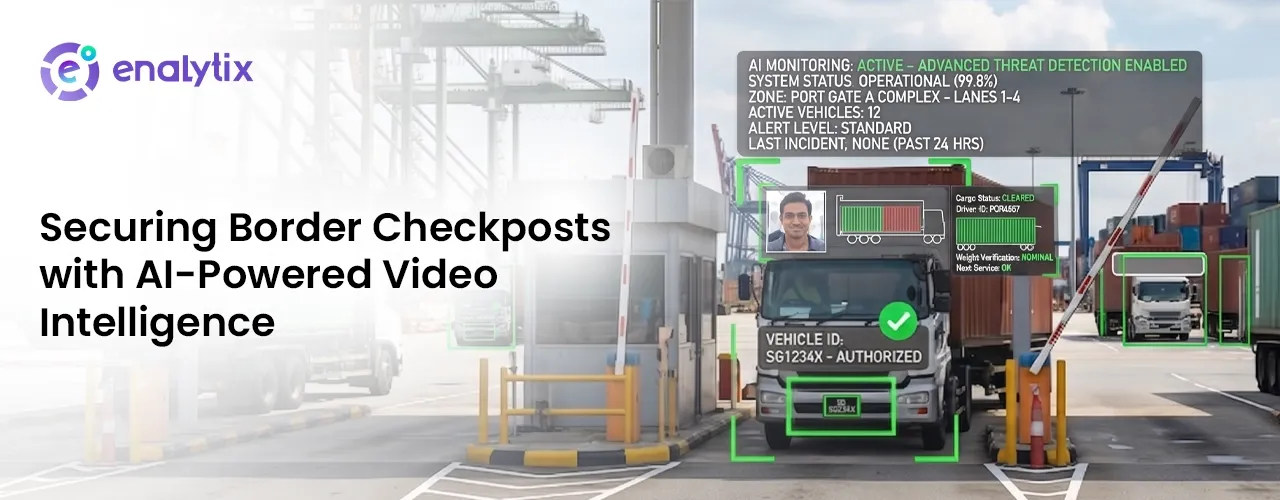
    This is where Automatic Number Plate Recognition earns its place. An ANPR-enabled camera reads vehicle number plates as they approach, cross-checks them against a maintained list, and flags matches instantly whether that’s a vehicle under watch, one reported for an incident, or one simply outside its permitted route.

    Think of a checkpost that processes a steady stream of commercial and private vehicles through the day. Manually noting down every plate and cross-referencing it against a watch list isn’t just slow it’s the kind of task fatigue quietly undermines. With ANPR in place, that verification happens automatically as each vehicle rolls through. A flagged number plate triggers an immediate alert to the checkpost team, who can then act — stop the vehicle, inspect it, log it while the rest of the traffic moves through without unnecessary delay. Screening gets faster and more consistent, without adding pressure on the personnel doing the watching.

    Now the checkpost has two things working in its favour, the ground is covered, and so is the gate. The real shift happens when those two stop working as separate systems and start working as one.

    Combining Intrusion Detection and ANPR for Real-Time Threat Monitoring

    Individually, intrusion detection and ANPR each close a real gap. Together, they close the space between them. A border checkpost rarely faces one kind of risk in isolation — a perimeter breach on foot and a suspicious vehicle approaching the gate can happen within the same window, and a security team needs visibility into both without splitting focus.

    This is where combining the two capabilities changes how a checkpost operates. Intrusion detection covers the ground fence lines, unmanned stretches, restricted zones. ANPR covers the road every vehicle entering or leaving. Layered together, they give the security team a single, continuous picture instead of two separate ones they have to mentally stitch together.

    Consider a checkpost handling both vehicle traffic and an extended perimeter on the same shift. A virtual tripwire alert on the eastern fence and an ANPR flag on an approaching vehicle might occur minutes apart and previously, catching both in time depended entirely on how much a guard could hold in their head at once. With both systems running together, each event is logged and alerted independently and instantly, giving the response team the full picture without needing to piece it together under pressure. Real-time monitoring stops being a best effort and starts being a reliable baseline.

    But visibility alone doesn’t stop anything. Someone still has to find out and find out fast enough to do something about it.

    AI-Powered Alerts for Faster Response to Suspicious Activities at Border Checkposts

    That’s the part detection alone can’t solve. A system that spots an intrusion or flags a vehicle is only half the job, the other half is making sure the right person is told, immediately. This is where alerting design becomes as important as the detection itself.

    A well-designed alert framework is built to close that last gap. When a virtual tripwire is triggered or an ANPR match occurs, the system pushes an alert directly to the relevant team, not buried in a log file waiting to be reviewed later, but delivered in the moment, so a response can begin while it still matters.

    Picture the checkpost team from earlier, now working with both systems live. A tripwire trigger on the perimeter sends an immediate alert to the nearest patrol unit, who reach the location within minutes rather than discovering the breach on the next scheduled round. At the same time, an ANPR flag on a watch-listed vehicle notifies the gate team before the vehicle even reaches the barrier. Neither event waited on a person noticing a screen. Both moved through a system built to notice first and inform second turning response time from a variable into something the checkpost can actually count on.

    Zoom out from any single alert, and a pattern starts to form across the whole operation.

    Key Benefits of AI Video Intelligence for Border Security Operations

    Follow that checkpost through a full week, and the shift becomes easier to see than to describe in the abstract. A few outcomes stand out consistently:

    • Continuous vigilance without fatigue — the system doesn’t lose focus at hour six of a shift the way a person naturally does.
    • Faster verification at scale — ANPR processes vehicles in real time, keeping traffic moving without compromising screening.
    • Reduced dependence on manual patrols alone — foot patrols still matter, but they’re now backed by continuous automated coverage between rounds.
    • Consistent, real-time alerting — response teams act on live information instead of retrospective footage review.
    • A unified operational view — perimeter and vehicle monitoring work together rather than as disconnected systems.

    None of this replaces the personnel stationed at a checkpost. It changes what their attention is spent on — moving them from constantly watching for something to actively responding to something confirmed.

    And that shift in attention is really the bigger story here one worth looking at beyond a single checkpost.

    Conclusion: The Future of Smart Border Security with AI Video Analytics

    That shift traces back to something border security has always depended on: people paying close attention under difficult conditions, for long hours, often with little support beyond a monitor and a flashlight. AI video intelligence doesn’t ask them to pay less attention it removes the burden of having to notice everything alone.

    As tools like intrusion detection and ANPR become standard rather than exceptional, the checkpost of the future starts to look less like a static watchpoint and more like an active system one that sees continuously, flags precisely, and hands its people the moment they need to act, right when it matters. That’s not a distant vision. It’s already the direction border security operations are moving toward, one checkpost at a time and platforms like Enalytix are helping make that shift practical, one capability at a time.

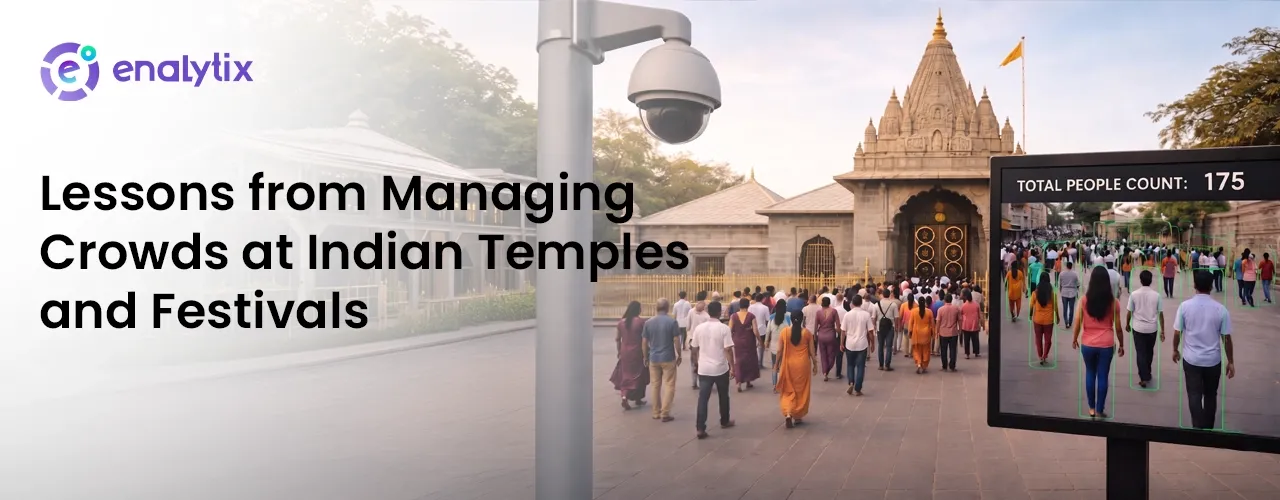
  • Stampede Prevention at Scale: Lessons from Managing Crowds at Indian Temples and Festivals

    Stampede Prevention at Scale: Lessons from Managing Crowds at Indian Temples and Festivals

    Introduction

    It starts the same way almost every time. A narrow lane. A queue that was orderly an hour ago. A rumour, a delay, a gate that opens ten minutes late. And then, within seconds, a crowd that was merely large becomes a crowd that is dangerous.

    Anyone who has worked in public safety in India knows this story too well. It’s the story behind Sabarimala, behind Kumbh Mela, behind a hundred smaller temple towns whose names rarely make the news until something goes wrong. The tragic part is that these events are rarely unpredictable. The warning signs are almost always there hours before, sometimes days before. The real failure isn’t a lack of data. It’s a lack of a system that can read that data fast enough to matter.

    This is the story of how temple crowd management is changing from headcounts and hunches to real-time, AI-powered video analytics that can see a stampede coming before it starts.

    Why Indian crowd events are uniquely high-risk

    Start with the basics: scale. A single day at a major temple festival can pull in more people than most countries’ entire stadium circuits combined in a year. Sabarimala’s peak season, the Kumbh Mela, Rath Yatra in Puri, Durga Puja, pandals in Kolkata, Sawan Mela at Baidyanath, these aren’t crowds in the way a concert or a cricket match is a crowd. They’re moving cities.

    Now layer on the terrain. Temple architecture wasn’t built for modern crowd volumes. Narrow stepped corridors, single-entry sanctums, uneven ghats, low overhangs, all designed centuries before anyone imagined lakhs of people converging in a single day. Add monsoon mud, festival lighting that creates blind spots, and processions that mix pedestrians with vehicles, and you have a physical environment that was never engineered for the loads it now carries.

    Then there’s timing. Crowd events in India are rarely flat they spike. A specific auspicious hour (muhurat), the opening of a gate, an idol’s darshan window, a fixed train or bus schedule, all of these compress arrivals into narrow windows. A crowd that builds gradually over six hours is manageable. A crowd that arrives in a thirty-minute surge is a different problem entirely.

    And finally, the human element: devotion doesn’t queue politely. People push not out of malice but out of urgency, the fear of missing a darshan, a ritual, a moment. That emotional intensity is exactly what makes traditional crowd control — barricades and whistles — insufficient on its own.

    Put these four together, extreme scale, unforgiving terrain, compressed timing, and emotionally charged movement and you get why Indian crowd events sit in a risk category of their own. Generic occupancy monitoring built for malls or airports doesn’t transfer cleanly. The system has to be built for this specific problem.

    How crowd density is measured in real time

    This is where the shift from manual to AI-powered video analytics changes everything. Traditionally, crowd control relied on personnel stationed at vantage points, radios, and best-guess estimates “it looks packed near Gate 3.” That’s not a measurement. That’s an impression, and impressions arrive too late and too imprecise to act on.

    A modern occupancy monitoring system works differently. Existing CCTV feeds, the same cameras already installed for security are fed into computer vision models that continuously estimate crowd density per zone, not for the venue as a whole. Density isn’t measured as a single number for “the temple.” It’s measured corridor by corridor, gate by gate, courtyard by courtyard, because a stampede risk in one lane can exist while an adjacent lane is completely calm.

    The system tracks people-per-square-metre in each zone, along with the rate of change is this zone filling up faster than people are leaving it? That rate is often more predictive than the density number itself. A zone at 70% capacity but climbing fast is more dangerous than a zone sitting steady at 85%.

    This is the part that makes AI-powered video analytics genuinely different from a headcount: it doesn’t just tell you how many people are somewhere. It tells you how that number is moving, and whether the movement pattern itself looks safe. Flow direction, bottleneck formation, and dwell time in narrow passages all become measurable signals instead of things a stationed guard has to notice and radio in.

    Early-warning thresholds for stampede prevention

    Measuring density is only useful if it translates into a warning before the danger point, not at it. This is where stampede prevention becomes a design problem, not just a technology problem: what threshold triggers what response, and how early is early enough?

    The thresholds aren’t arbitrary. They’re built zone by zone, using the physical characteristics of that specific space, corridor width, number of entry/exit points, surface type, historical footfall patterns for that day of the festival calendar. A stretch of open courtyard can absorb a density that would be dangerous in a covered, single-exit corridor. Treating every zone with the same threshold is one of the most common mistakes in legacy crowd management and one of the easiest to fix with a zone-aware system.

    Crucially, the goal is a graduated response, not a single alarm. A well-designed system flags three tiers: a caution level (density rising, worth watching), a warning level (density approaching capacity, entry should slow), and a critical level (immediate intervention needed this is the stage no one wants to reach). The value of this staging is that it gives ground teams time to act at the caution and warning stages, when a gate closure or a diverted queue is a minor operational decision not a moment of crisis management.

    This is the essence of stampede prevention done right: the system’s job isn’t to report the emergency. It’s to make sure the emergency is prevented from happening in the first place, by surfacing the trend early enough that a small correction, not a large intervention is all that’s needed.

    Coordinating alerts with on-ground response teams

    An early warning that nobody acts on is just a notification. The real test of any occupancy monitoring system is what happens in the fifteen seconds after the alert fires.

    This is why crowd alerts need to be built around the people who will actually respond, police personnel, temple volunteers, event marshals not just around a control room dashboard. An alert that only lives on a screen in a back office does nothing for the volunteer standing at the gate where density is climbing. The alert needs to reach that person, at that gate, with a clear instruction: slow entry, redirect to the alternate path, hold the queue.

    In practice, this means integrating the alerting layer with existing communication channels, radios, WhatsApp groups, PA announcements  rather than asking response teams to learn a new tool during a live event. It also means giving control room operators a clear visual: which zone triggered the alert, what the current trend looks like, and what the recommended action is, so a decision can be made in seconds rather than minutes.

    Coordination also has to account for something very specific to Indian festival deployments: the response team is rarely a single organisation. It’s typically a mix of police, temple trust staff, local municipal officials, and volunteers, each with different communication habits and different authority to act. A crowd alert system earns its value not by being sophisticated, but by being simple enough that all of these groups can act on the same signal without confusion about who does what.

    Lessons from temple and festival deployments

    A few patterns repeat across deployments, and they’re worth stating plainly because they cut against some common assumptions.

    First, the busiest hour is rarely the most dangerous one. The highest-risk moments tend to occur during transitions, gate openings, the start of a specific ritual, the end of a procession, when a large, stationary crowd suddenly starts moving in one direction. Density-based monitoring that watches for these transition points, not just peak headcount, catches risk that a simple attendance count would miss entirely.

    Second, the same camera infrastructure that already exists for security purposes is usually sufficient for smart video analytics. Very few deployments require new cameras, most require better use of what’s already mounted on poles and gates. This matters practically: it means temple trusts and event organisers can adopt real-time crowd monitoring without a large new capital outlay, because the transformation happens at the software layer, not the hardware layer.

    Third, and perhaps most important: a system’s usefulness is measured by how boring the outcome looks. The best deployments don’t produce dramatic rescue stories — they produce quiet, uneventful festivals where a gate was closed ten minutes earlier than planned, a queue was split into two lines, and nobody outside the control room ever knew a threshold had been crossed. That’s what stampede prevention actually looks like when it works, not a dramatic intervention, but an invisible one.

    That, ultimately, is the shift underway in Indian crowd management: from managing crowds after they become dangerous, to seeing them clearly enough, zone by zone, minute by minute, that “dangerous” never gets the chance to happen at all.

    Conclusion

    None of this replaces the people on the ground, the police personnel, the volunteers, the temple staff who have managed these crowds for generations with nothing more than experience and instinct. What it does is give them something they’ve never had before: a clear, early, zone-by-zone view of what’s actually happening, in time to act on it.

    That’s the real promise of bringing AI-powered video analytics to temple and festival crowd management. Not a replacement for judgment, but a force multiplier for it, turning cameras that were only ever watching for security into a live safety net for the millions of people who show up, year after year, simply to be part of something they believe in. Getting that balance right, technology in service of tradition, not in place of it is what stampede prevention at scale actually looks like. Because the measure of success was never how well a system performs when things go wrong. It’s how quietly everything goes right.

  • Biometric Attendance Without New Hardware: Repurposing Office CCTV for Face Recognition Check-ins 

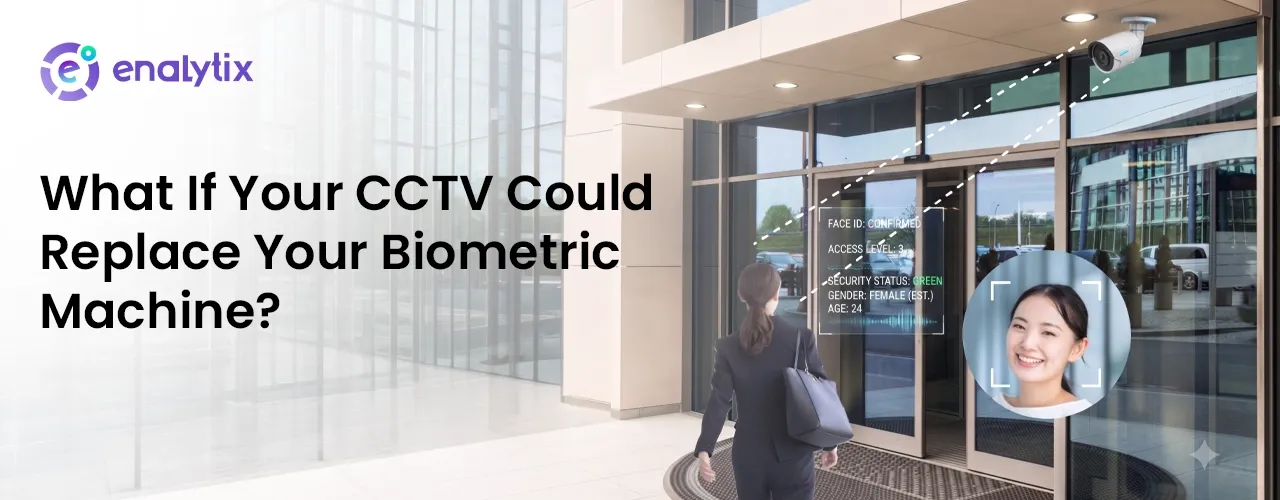
    Biometric Attendance Without New Hardware: Repurposing Office CCTV for Face Recognition Check-ins 

    Introduction 

    It’s 9:02 AM. Twelve people are standing in a line at the biometric device by the entrance, waiting to press a thumb that may or may not read correctly on the first try. Somewhere in HR, someone is about to open a spreadsheet to reconcile “device offline” errors from three different branches. This scene repeats itself every single morning, in almost every mid-sized company in India and most leadership teams have simply accepted it as the cost of tracking attendance. 

    But here’s the part that doesn’t get asked often enough: why does checking who’s present require a brand-new device at all, when there’s already a camera pointed at that same doorway? To see why that question matters, it helps to first look at what the “accepted cost” of attendance tracking actually adds up to. 

    The Cost Problem with Dedicated Biometric Devices 

    Traditional biometric attendance systems come with a familiar, if quietly expensive, shopping list: a fingerprint or face scanner at every entry point, wiring and mounting at each location, an on-premise controller or local server, and then the ongoing costs — device servicing, sensor replacement, and IT support tickets every time a reader stops recognizing chapped hands or a dusty lens. 

    Multiply that per door, per floor, per branch, and the math stops looking like a one-time purchase and starts looking like a recurring line item. For a company with five locations, that’s five sets of hardware, five sets of failure points, and five sets of “the machine is down again” complaints landing on HR’s desk. 

    Here’s the part that makes the whole setup feel unnecessary: most of these buildings already have CCTV cameras covering the exact same entry points the biometric device was installed next to. The camera was bought for security. The attendance device was bought separately, for time tracking. Two budgets, two vendors, two systems that don’t talk to each other, solving what is fundamentally one problem: knowing who walked in, and when. Which raises the obvious next question — if the camera is already there, what would it actually take to make it do this job too? 

    How Facial Recognition Attendance Software Works on Existing Cameras 

    That’s exactly where the shift happens. Instead of adding another box to the wall, face recognition attendance software runs as an intelligent layer on top of the CCTV feed that’s already there. No new drilling, no new device, no separate login for a separate machine, just software sitting on top of hardware that was doing something else a moment ago. 

    Here’s the flow, in plain terms: 

    1. Enrollment – Each employee’s face is registered once, creating a secure facial template (not a photo file sitting in a folder, but a mathematical representation used purely for matching). 

    2. Detection – As someone walks past the camera at the entrance, the software detects a face in the frame in real time. 

    3. Matching – That face is matched against the enrolled database within a fraction of a second. 

    4. Logging – A check-in (or check-out) timestamp is recorded automatically and pushed to the attendance dashboard — no card tap, no thumb press, no queue. 

    The camera itself doesn’t change. What changes is the intelligence sitting behind it, turning passive footage into an active, structured attendance log. For a business, this means the CCTV that was “just for security” starts doing double duty and the biometric attendance system effectively gets built on infrastructure that’s already paid for. Of course, the moment a camera starts recognizing faces automatically, a fair set of questions follows right behind it. 

    Accuracy, Speed, and Privacy Considerations 

    Naturally, the first question every ops or HR leader asks is: does it actually work as well as a dedicated device? And close behind that: is it safe to trust with people’s faces? 

    Accuracy — Modern face recognition attendance software is built to handle real-world office conditions: people wearing masks part of the year, glasses, changing lighting near glass entrances, and the general chaos of a morning rush. The matching engine is trained to account for these variables rather than needing a perfectly still, well-lit frame the way older fingerprint scanners needed a perfectly clean thumb. 

    Speed — Because there’s no physical contact step, check-ins happen as people simply walk through, the queue that used to form at a fingerprint device tends to disappear entirely, especially at shift-change times when dozens of people arrive within the same few minutes. 

    Privacy — This is the part companies should ask the most questions about, not the least. A responsible system should store facial data as encrypted templates rather than raw images, restrict access to who can view attendance data, and give the company full control over data retention and deletion. Any vendor proposing this kind of system should be transparent about exactly where that data lives and who can query it — this isn’t a “nice to have,” it’s the baseline for rolling out facial recognition responsibly in a workplace. 

    Get accuracy, speed, and privacy right at one location, and a second question follows almost immediately: what happens when this isn’t just one office, but ten? 

    Multi-Location Rollout: What Changes at Scale 

    A single office adopting this is a convenience upgrade. A company with ten or fifty locations is where the model really proves itself. 

    With traditional biometric devices, scale means replicating hardware and its problems at every site — new devices to procure, new local servers or controllers to configure, and IT tickets that differ from branch to branch depending on which device broke that week. 

    With a camera-based approach, scale looks different: 

    No new hardware procurement cycle for each new branch — if there’s a working CCTV camera at the entrance, the software layer can be extended to it. 

    Centralized visibility — attendance across all locations flows into one dashboard, instead of HR pulling separate exports from separate local devices. 

    Consistent enrollment — an employee who transfers between branches or covers a shift at another location doesn’t need to be re-enrolled on a separate physical device. 

    Faster rollout timelines — going live at a new branch becomes a software and configuration task, not a hardware installation project. 

    This is also where the time attendance software conversation starts overlapping with something bigger than attendance alone — the same camera network can, over time, support other use cases like footfall counting or safety compliance, without adding another layer of devices. But scaling the check-in itself only solves half the problem. The other half is what happens to that data once it’s captured. 

    Integration With Payroll and HR Systems 

    Attendance data is only as useful as what happens to it after the check-in. An attendance tracking software that sits in isolation, generating logs nobody exports on time — creates as much manual work as no system at all. In other words, the same disconnect that started this whole story (a camera and a device that didn’t talk to each other) can quietly show up again, this time between the attendance system and payroll. 

    The real fix is integration: attendance logs flowing directly into payroll for accurate salary and overtime calculation, automatic leave and shift reconciliation instead of manual matching at month-end, and real-time dashboards for HR and plant/floor managers to see who’s in, who’s late, and who’s absent, without waiting for an end-of-day report. 

    When a face recognition biometric attendance system is built to plug into existing payroll and HR workflows rather than requiring a parallel process, attendance stops being a standalone admin task and becomes a live data feed that the rest of the business can actually use. 

    The Bigger Shift 

    Which brings the story back to where it started: a line of people at 9:02 AM, waiting on a device that was never really necessary in the first place. None of this is about replacing one gadget with another, it’s about recognizing that the camera already on the wall was always capable of more than watching for security incidents. 

    For a company sitting on CCTV infrastructure it already paid for, the question isn’t whether to modernize attendance tracking. It’s why that infrastructure isn’t already doing it. 

  • Heatmaps for Store Layout: What 90 Days of Camera Data Taught One Retailer About Aisle Placement

    Heatmaps for Store Layout: What 90 Days of Camera Data Taught One Retailer About Aisle Placement

    Introduction

    When we manage online stores or websites, tracking where users get stuck is pretty simple. We look at click rates, check where people exit the page, and use digital heatmaps to see where they scroll. But in a physical, brick-and-mortar store, understanding how people move has always been a guessing game. For years, retail managers had to walk around with clipboards or rely on gut feeling to guess which aisles were working and which ones were ignored.

    Recently, a clothing and grocery retailer decided to change that. They took 90 days of video footage from the security cameras they already had installed and ran it through modern AI powered video analytics. By turning regular video into simple visual maps, they learned exactly how shoppers behave inside a store. Here is what that data revealed.

    What a Retail Heatmap Actually Shows

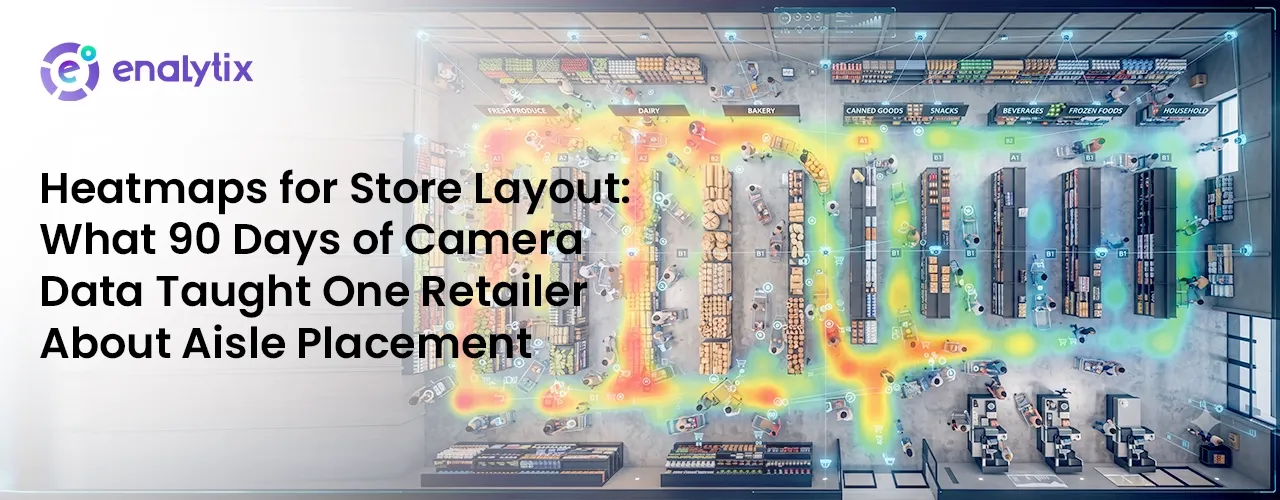
    A retail heatmap isn’t complicated. It’s just a colorful layer placed on top of a store’s map that shows where people walk and stand. While a basic retail footfall counter software at the entrance can only tell you how many people walked into the store, store analytics heatmap tools go much deeper. They track two main things: traffic volume (how many people pass by) and dwell time (how long they actually stop).

    The software securely tracks movement and turns time spent in an area into colors. Heavy traffic and long stops show up as “hot zones” (bright red and orange), while ignored spaces stay “dead zones” (cool blue). This gives brands a clear picture of customer journey analytics in retail without needing any fancy or expensive new gadgets.

    Reading Hot Zones vs Dead Zones

    When the retailer first looked at the data, they assumed every red spot was good and every blue spot was a failure. But they quickly realized that reading a heatmap requires understanding human psychology.

    For example, the biggest red hotspot on the map was right inside the main entrance. At first, it looked like customers were loving the products placed there. In reality, it was just a “decompression zone”—the space where people naturally slow down, adjust to the indoor lighting, and look around to figure out where to go next. They weren’t looking at the products; they were just orienting themselves.

    True hot zones are deeper in the store, where people actually stop to browse a shelf. On the other hand, blue dead zones showed exactly where the layout was failing—like corners where bad lighting or tight corners made shoppers turn around and walk away before even seeing the items.

    Case Study: The 90-Day Aisle Optimization Experiment

    To see how this data actually helps a business, let’s look at what this retailer did over 90 days. They used an in-store people counting system to track behavior across three distinct phases.

    Phase 1: Days 1-30 ➔ Find the bottlenecks and find out why the center aisle is empty.

    Phase 2: Days 31-60 ➔ Move displays, tilt shelves 45 degrees, and change product locations.

    Phase 3: Days 61-90 ➔ Check the new heatmap and see a 14% jump in foot traffic.

    During the first 30 days, the data showed a massive problem: almost 73% of customers completely ignored the middle aisle, which actually held the store’s highest-profit items. The heatmap revealed that a giant promotional display near the front door was blocking the view, forcing everyone to walk along the outer walls instead.

    On day 31, the manager made three simple changes based on the camera data:

    • They cleared the entrance zone, moving the big display stands deeper into the store so the view was wide open.
    • They turned the inside shelves at a 45-degree angle. This way, as customers walked down the main path, they could easily see inside the middle aisle out of the corner of their eye.
    • They moved everyday staple items (things people always buy) right into the center of that empty middle aisle to pull traffic into the dead space.

    By day 90, the data showed a complete transformation. Foot traffic into the center aisle jumped by 14%. More importantly, when they checked their daily sales numbers, they found that because people were spending more time in that high-profit aisle, the average amount spent per customer went up significantly.

    Measuring the before/after impact

    By day 90, the data showed a complete transformation across the floor plan. Foot traffic into the center aisle alone jumped by 14%, which completely changed the baseline movement of the entire store. But the real validation came when the store manager cross-referenced these new movement maps with their point-of-sale cash registers at the end of the week. They found a massive financial shift that matched the color changes on the screen. Because people were now taking their time and spending more minutes in that specific high-profit corridor instead of just rushing past it, the average basket size per customer went up significantly.

    Shoppers started picking up items they usually overlooked simply because they had the physical space and the visual angle to notice them. Instead of a few popular products carrying the bulk of the revenue, sales became much more evenly distributed across the entire shelf setup. The entire project proved that minor tweaks in physical design can trigger major changes in how people buy. In fact, the profit generated from those newly discovered conversions allowed the layout change to pay for itself in just a few weeks, turning a blind spot into the most profitable zone in the building.

    Common Mistakes When Interpreting Camera Analytics

    While using retail store performance analytics is incredibly helpful, it is easy to misinterpret the data if you aren’t careful.

    The biggest mistake is confusing a delay with actual popularity. For instance, a bright red spot would often appear right near the checkout counters. A quick look might make you think customers love that area. But in reality, it was just a long queue because the cash register was slow. Customers were standing still because they were stuck in line, not because they wanted to buy something. Treating a bottleneck as a “high-engagement zone” will ruin your data.

    Another mistake is trying to get rid of every single blue zone. A store needs “quiet” or empty space. Wide walkways, clear paths to emergency exits, and open areas near trial rooms are necessary to keep the store comfortable. If you crowd every square foot with products just to turn a blue zone red, you’ll make the store feel claustrophobic, and shoppers will leave faster.

    Ultimately, the gap between online tracking and real-world shopping is disappearing. The future of retail belongs to businesses that use simple video intelligence to understand physical shoppers just as clearly as website visitors. By keeping dashboards simple for managers on the ground, these smart tools easily become a natural part of running a successful everyday business.

  • Improving Zoo Security with AI Video Analytics

    Improving Zoo Security with AI Video Analytics

    Introduction

    Let’s be honest about managing a zoological park. It is a massive footprint to cover. Open-air enclosures, acres of wooded trails, wild animals, and thousands of distracted tourists walking around with cameras. Most zoos think they are safe because they have a central room full of CCTV monitors. But that is just a checklist item. Traditional cameras don’t look for risks; they just record the incident. If a visitor climbs a barrier or an animal slips out, you only find out after someone screams. That is passive logging, not safety.

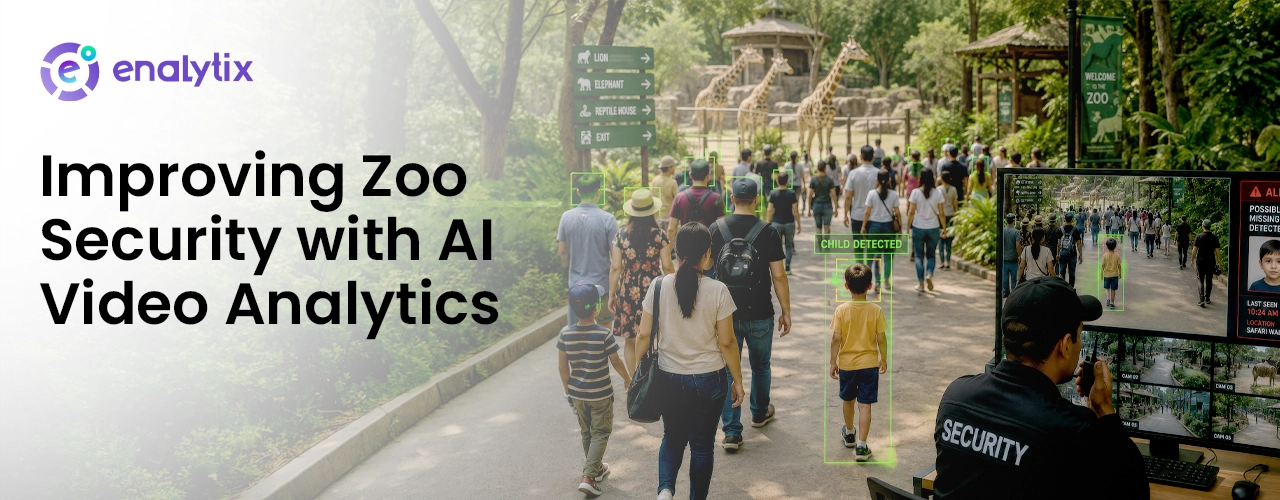
    We need to fix this. Shifting to ai-powered video analytics isn’t about adding more screens. It’s about giving your existing grid a digital brain to flag anomalies before they turn into an operational crisis.

    Why Zoos Need AI-Powered Video Analytics for Modern Operations

    Human operators have a biological ceiling. Staring at a wall of 100 live camera feeds during a busy weekend shift is an impossible task. Within forty-five minutes, the eyes tire, shadows blend together, and critical movements get missed. It isn’t a training issue; it’s human fatigue.

    Relying on a guard to spot a boundary breach in real-time is a gamble. Integrating smart video analytics into your park operations removes this element of luck. The software scans every single zone across all feeds simultaneously, 24/7. It provides an objective layer of tracking that doesn’t get distracted by a text message or a long shift.

    Enhancing Zoo Security with Smart Video Analytics

    Standard motion sensors fail in a zoo environment. Trees sway, birds fly across lenses, and stray rodents trigger false alarms constantly. Eventually, operators start ignoring the pings because 99% of them are noise.

    Advanced smart video analytics solves this through precise object classification. The system understands the difference between a falling leaf and a human shape entering a restricted holding bay. By filtering out the environmental noise, your security team stops chasing ghosts. They only deploy when the AI flags a genuine, verified perimeter breach.

    Using Camera Analytics to Monitor Animal Enclosures Effectively

    The safety railing around a high-risk enclosure is a strict boundary, but visitors ignore it constantly. People lean over for selfies, drop personal items, or set their kids on top of the walls for a better view.

    By applying camera analytics to the enclosure feeds, you can create invisible, non-negotiable safety zones:

    • Buffer Zone Intrusion: The software automatically flags if a person steps off the pedestrian path into the stand-off area.
    • Barrier Proximity: It counts the seconds a human shape remains stationary on top of a protective fence line.
    • Proactive Warning: It pings the nearest floor marshal before the person actually drops or climbs inside, turning a potential disaster into a quick verbal correction.

    Real-Time Safety Alerts for Visitors, Staff, and Animals

    When a crisis happens on a 50-acre property, communication delays are your biggest enemy. If an altercation occurs at a crowded food court or a handler faces a lock-in issue, relying on someone to make a radio call takes too long.

    Our system tracks physical disruptions like active fights or sudden crowd surges based on pure structural movement data. The moment a physical conflict or a barrier breach is detected, the platform triggers immediate safety alerts. These bypass the slow, traditional chain of command and hit the smartphones of the closest response rangers instantly, complete with exact coordinates.

    How Fall Detection Systems Improve Emergency Response in Zoos

    Uneven stone paths, wet boardwalks, and steep steps near aquatic exhibits are major trip hazards. In a sprawling park, if an elderly visitor or a lone staff member falls on a secluded trail, they could lie there for an hour before being found.

    This is where a dedicated fall detection algorithm becomes vital. It tracks human posture in 3D space. The second a person’s skeletal frame drops from vertical to horizontal and stays down, the AI registers a fall. An automated alert goes to the medical desk immediately. Slashing the discovery time down to seconds is critical for handling heatstrokes or sudden cardiac arrests on hot summer days.

    Real-World Use Case: The Maintenance Moat Fall

    Imagine a keeper working near an open enclosure moat during off-hours. They lose their footing and fall down the concrete incline, landing out of the direct sight of main paths. The fall detection software captures the sudden downward momentum and the prone posture within milliseconds. It bypasses the need for a manual check-in, routes an emergency notification to the rescue crew, and ensures the injured worker is pulled out safely.

    AI Video Analytics for Better Animal Behavior Monitoring and Care

    Wildlife safety goes beyond visitor gates. Animals are experts at hiding symptoms of injury or stress when human handlers walk into their enclosures. It’s a basic survival instinct.

    Continuous tracking via camera analytics allows veterinary teams to monitor animal behavior without creating human stress:

    1. Stereotypic Pacing: Automatically logs if an animal starts repetitive, compulsive movement loops that indicate stress.
    2. Resource Guarding: Tracks if a specific animal is being bullied or blocked from food troughs by dominant group members.
    3. Maternity Support: Provides zero-disturbance monitoring for pregnant or newborn animals, ensuring they are resting safely without needing constant, intrusive physical checks.

    Future of Zoo Management with Intelligent Surveillance Solutions

    The era of isolated security setups is over. Modern facility management is about connecting your camera analytics directly into your public information systems.

    The future of smart zoos involves linking an ai-powered video analytics framework directly with digital park signage. If the primate exhibit hits peak capacity, the system automatically updates the entry billboards with current wait times and suggests alternative, less-congested paths across the park. This kind of data-driven coordination doesn’t just keep people safe; it optimizes the entire visitor experience. Enalytix turns passive CCTV feeds into an active, thinking safety asset, ensuring your park runs seamlessly at the speed of data.

  • Smart Surveillance Solutions for Tourist Safety at Popular Public Attractions

    Smart Surveillance Solutions for Tourist Safety at Popular Public Attractions

    Introduction

    Let’s be realistic about iconic tourist destinations. Whether it is a historic fort, a scenic viewing point, or a crowded public monument, managing thousands of excited visitors simultaneously is a massive operational hurdle. For decades, authorities have relied on traditional CCTV networks. But regular cameras are passive. They just record the crowd bottlenecks, the perimeter slips, or the emergency incidents so you can review the footage after the damage is done. That isn’t public safety; it’s just a digital post-mortem.

    We need a proactive approach. The shift towards an automated video intelligence solution is about moving from “watching a crisis” to “preventing a disruption.” AI cameras change the entire setup by giving security teams an objective, continuous layer of oversight that protects travelers while keeping the operational flow smooth.

    Why Tourist Attractions Need Smart Surveillance Systems

    The sheer scale of popular landmarks means manual human monitoring hits a physical ceiling very quickly. A small team of operators sitting in a control room cannot realistically watch 200 live camera feeds simultaneously during peak holiday seasons. Human fatigue is a biological reality; it sets in within an hour. When that happens, structural anomalies, unauthorized access, or minor entry gate delays pass by unnoticed simply because there is too much visual data for human eyes to process.

    Manual tracking often comes down to pure luck, whether an operator happens to look at the right screen at the exact right second. Embedding advanced AI tools directly into the landmark infrastructure fixes this loophole. The system processes every active zone across all connected feeds at the same time, acting as a non-stop safety net.

    Enhancing Public Safety with AI Video Surveillance

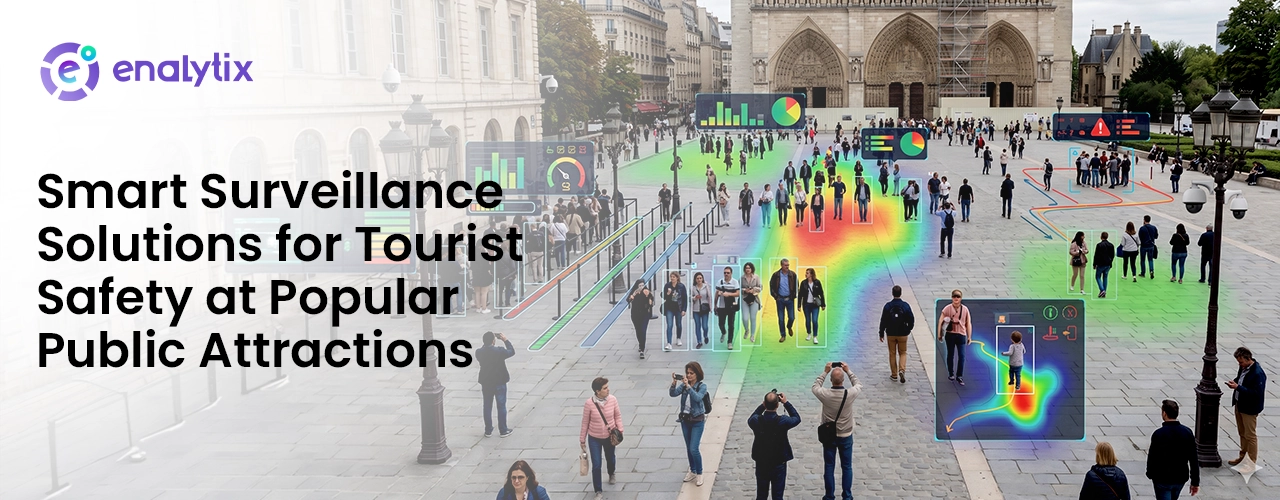
    Modern ai video surveillance doesn’t just record video; it understands the physical boundaries of a space. By utilizing deep-learning algorithms, the system can track vehicular and pedestrian movement patterns simultaneously without any human bias.

    Real-World Use Case: The Viewing Deck Flow Management

    Imagine a popular hill-station viewpoint or a historical monument balcony. A standard camera setup requires a manual guard to constantly guess the crowd size. An Enalytix-driven system, however, uses precise zone-based crowd counting. Authorities can set a strict numerical capacity limit for that specific deck. The moment the live headcount crosses the safe threshold, the system flags the congestion instantly. This allows floor marshals to temporarily pause entry at the access gates, maintaining an orderly and safe visitor flow before the deck becomes uncomfortably overcrowded.

    Using Crowd Alerts to Prevent Overcrowding at Tourist Destinations

    High tourist influx is great for the local economy, but managing dense crowds outside ticketing counters or narrow entry arches is a major logistics challenge. Extended wait times cause queues to become disorganized, which quickly creates friction and pedestrian blocks on the floor.

    Our specialized analytics systems assist administrative teams by reading crowd dynamics in real-time. The AI calculates the exact density per square meter. If a pathway begins to show signs of heavy congestion, the software triggers automated crowd alerts. This gives ground staff and local authorities an early indicator to step in, organize the lines, and temporarily regulate the entry gates to keep the movement smooth.

    Occupancy Monitoring Systems for Better Visitor Management

    Knowing exactly how many people are inside a specific zone is critical for micro-management. Traditional methods rely on manual gate turnstiles, which fail if people bypass the gates or enter through exit routes.

    An intelligent occupancy monitoring system solves this by tracking the physical chassis of visitors across multiple entry and exit points simultaneously.

    • Live Headcounts: Keeps an exact count of people inside closed museum halls or historical rooms.
    • Over-Capacity Preventions: Automatically alerts the team when a section hits 90% of its safe capacity.
    • Asset Allocation: Helps authorities deploy extra ticketing staff or medical assistance to the exact zones where the tourist volume is highest.

    How AI Helps in Stampede Prevention at Public Attractions

    In high-density public spaces, a sudden panic can lead to a stampede within minutes. Humans are bad at estimating crowd forces during a rush, but AI models can spot the early signs of physical compression.

    Our stampede prevention framework looks for “flow counter-currents.” If a massive crowd is moving forward and a small group suddenly tries to run backward due to panic, the AI detects the structural friction instantly. It doesn’t rely on tracking vague intent or body language; instead, it tracks the rapid, chaotic physical displacement of the crowd. This allows authorities to open emergency exit gates and broadcast automated public announcements to steer the crowd safely, preventing a crush before it can form.

    Real-Time Safety Alerts for Faster Emergency Response

    Physical altercations, medical crises, or accidental slips on historical steps happen in seconds. In a dense crowd, a person who has collapsed can go unnoticed by ground guards for vital minutes.

    The system is explicitly trained to spot the distinct physical parameters of active disruptions and falls. The moment a physical conflict or a sudden human collapse onto the floor is identified, the system triggers immediate safety alerts. These notifications bypass traditional slow chains of command and go straight to the smartphones of nearby first-aid responders and security personnel with exact location coordinates.

    Real-World Use Case: The Waterfront Perimeter Protection

    Consider a popular lakeside, riverside, or beach front where safety boundaries are marked. Instead of waiting for a visitor to accidentally venture too deep or cross into dangerous zones, Enalytix deploys virtual tripwires directly onto the camera feed along the safety line. If a tourist steps over the designated safety perimeter or enters a restricted water boundary, the system registers a boundary breach instantly. An automated alert pings the on-ground security or lifeguard station immediately with the exact zone location, allowing for rapid verbal intervention before an actual emergency occurs.

    Future of Smart Tourist Safety with AI-Powered Surveillance Solutions

    Modern tourism is evolving toward a fully smart, data-driven experience. The future of secure public landmark management relies heavily on advanced ai video surveillance capabilities to support public administrators.

    We are looking at deep integrations where an automated occupancy monitoring system can communicate directly with digital signage outside the monument gates, informing arriving travelers about current wait times and alternative less-crowded paths in real-time. With Enalytix, turning passive camera data into an intelligent safety asset helps authorities conduct smooth, safe, and highly organized visitor management. We turn standard cameras into active, thinking protectors to make “Zero-Incident” public attractions a reality.

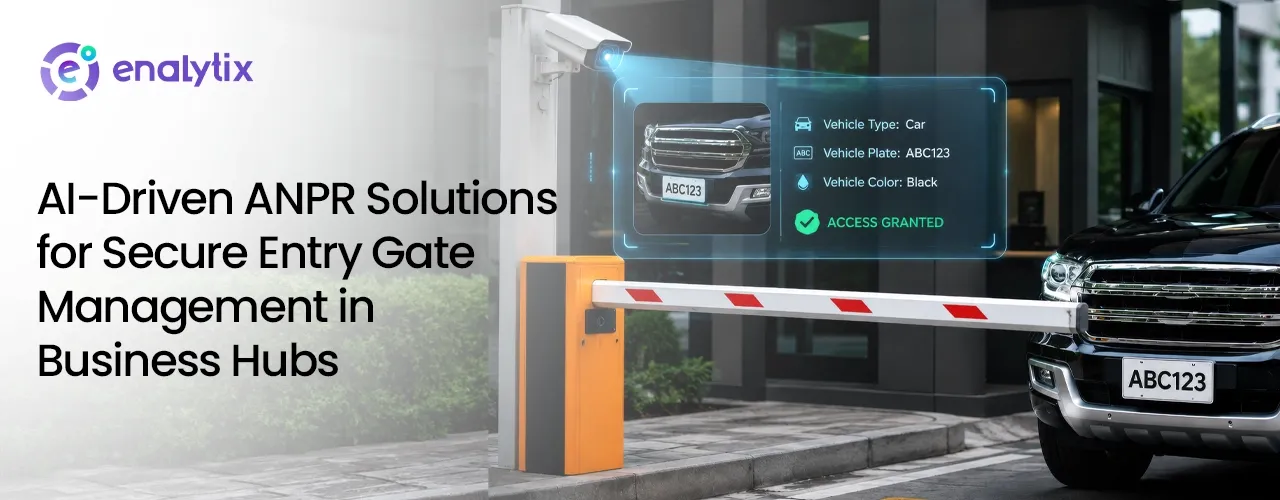
  • AI-Driven ANPR Solutions for Secure Entry Gate Management in Business Hubs

    AI-Driven ANPR Solutions for Secure Entry Gate Management in Business Hubs

    Introduction

    Let’s be honest about corporate tech parks at 8:45 AM. It is a mess. Cars are spilling onto the main road, security guards are bending down to read windshield stickers, and people are getting late for meetings. Then, a black SUV slips right past because the guard was busy arguing with a delivery driver.

    We call this security theater. You have a gate, you have a guard, but you don’t actually have control. Manual checking at entry gates creates a massive bottleneck where you are forced to choose: do you slow down traffic to be secure, or do you speed things up and risk unauthorized entries?

    Integrating AI in security at your perimeter changes this entirely. It stops being about luck and starts being about automation.

    What is Automatic Number Plate Recognition (ANPR) Technology?

    Don’t confuse Automatic Number Plate Recognition (ANPR) with standard CCTV. A regular camera just takes a picture of a car. That’s it. It doesn’t tell you who owns it.

    An advanced ANPR system does something completely different:

    • It spots the vehicle approaching.
    • It extracts the plate characters using specialized OCR.
    • It converts that image into text data in milliseconds.
    • It matches that text against your corporate white-list.

    If everything looks good, the boom barrier opens. The driver doesn’t even need to roll down their window. It effectively gives your physical gates a digital brain.

    How ANPR Solutions Improve Security at Business Hub Entry Gates

    Human guards get tired. It’s a biological fact. After looking at 1,500 license plates in a shift, the digits start blurring together. If a suspended employee or a banned vehicle tries to enter during the morning rush, a manual guard will likely miss it.

    By deploying automatic number plate recognition software, you take human fatigue out of the picture. The AI doesn’t get distracted by a busy gate. The second an unauthorized plate is scanned, the system locks the barrier and sends an instant alert to the main security desk. Your guards stop doing paperwork and start focusing on actual threat response.

    Benefits of Automatic Number Plate Recognition Cameras for Vehicle Management

    Using standard cameras for gate tracking is a major compliance risk. Normal lenses get blinded by high-beam headlights at night, and they fail completely during heavy rain or fog.

    A dedicated Automatic Number Plate Recognition Camera is built differently:

    1. Infrared (IR) Capability: It cuts through glaring headlights and dark nights to get a crystal-clear shot of the plate.
    2. Speed Adaptability: It captures sharp images even if a car is trying to speed past the sensor line.
    3. Flawless Logs: It keeps an unalterable digital footprint of every single asset, simplifying your daily vehicle management.

    AI in Security: Enabling Touchless and Secure Vehicle Access

    Nobody wants to stop, roll down their window in the rain, and tap an RFID card against a reader that barely works. It’s slow, outdated, and frustrates your employees before their workday even begins.

    Using AI in security allows you to move to a fully touchless access model. The ANPR software recognizes the vehicle from 10 meters away. By the time the car reaches the gate, the barrier is already up. It keeps the traffic moving smoothly while maintaining a strict, non-negotiable security protocol behind the scenes.

    Real-Time Vehicle Tracking with ANPR Software

    Security doesn’t end once the car enters the gate. In a massive tech hub with multi-level basements or separate corporate towers, you need to know exactly where that vehicle goes.

    With enterprise-grade automatic number plate recognition software, you get internal campus tracking:

    • Zone Violations: Alert the team if a visitor car parks in the executive V.I.P. zone.
    • Overstay Flags: If a vendor truck goes into the loading bay and doesn’t leave within its designated two-hour window, the system flags it.
    • Audit Trails: If an incident happens on campus, you can trace the exact route of that specific vehicle within seconds.

    Reducing Unauthorized Entry Using AI-Driven Gate Management Systems

    Tailgating is the simplest way to breach a corporate campus. One authorized car passes through, and a second car glides in right behind it before the boom barrier comes down. Guards often miss this, especially when they are overwhelmed by a long line of vehicles.

    AI gate management solves this by counting the actual metal chassis passing over the sensor. If the Automatic Number Plate Recognition system logs one plate but the video tracking loop sees two separate cars crossing the line, an alarm rings instantly. The secondary security gates lock down automatically, trapping the tailgating vehicle before it reaches the main parking lot.

    Future of Smart Business Campuses with ANPR and AI Security Solutions

    We are moving away from isolated security systems. The future of corporate infrastructure lies in tying your vehicle management directly into building automation.

    Imagine a system where the entry gate scan automatically registers the employee’s attendance, pings the smart HVAC system to prep their specific floor, and pre-allocates a parking spot near their elevator bank. This isn’t just about luxury; it’s about a highly connected ecosystem where data works to protect your campus, your assets, and your people. Moving to an AI-driven ANPR system means your security finally runs at the speed of your business.

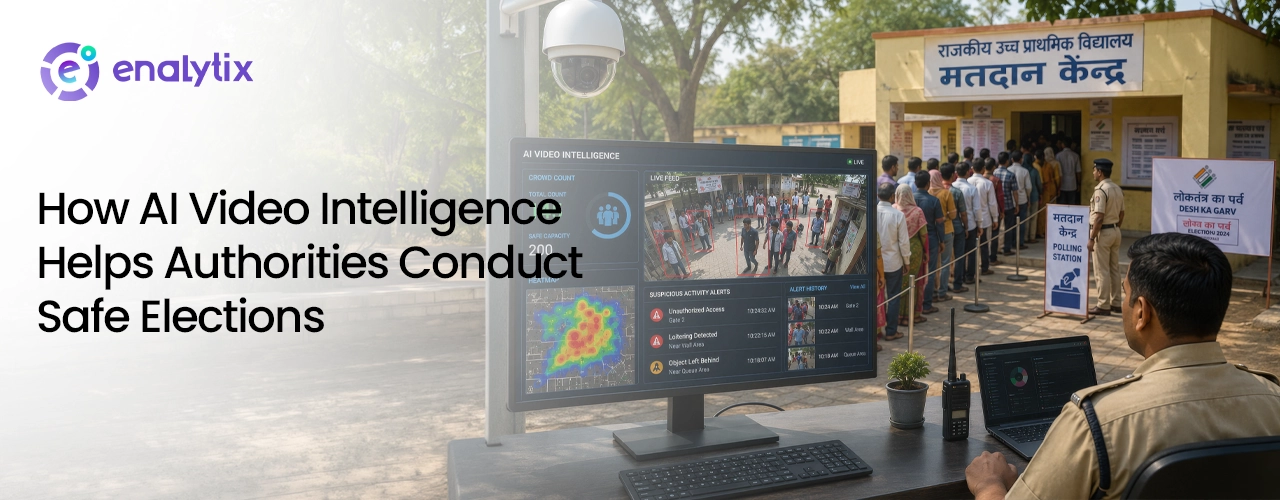
  • How AI Video Intelligence Helps Authorities Conduct Safe Elections

    How AI Video Intelligence Helps Authorities Conduct Safe Elections

    Introduction

    Let’s be completely honest, conducting an election in a democracy is a logistical nightmare. You have millions of voters, thousands of polling booths scattered across rural and urban zones, and a political atmosphere that can turn volatile in seconds. For decades, election authorities have relied on traditional CCTV cameras to keep an eye on things. But here’s the problem: a standard camera is passive. It just records the booth-capturing, the voter intimidation, or the crowd chaos so you can watch it later during a court hearing. That isn’t security. That’s just a digital post-mortem.

    We need to change how we look at election security. The introduction of a modern video intelligence solution is about shifting from “watching the damage” to “preventing the crisis.” AI changes the game by giving election observers eyes that never get tired, never blink, and never take sides.

    Why Safe Elections Need AI-Powered Video Intelligence

    The sheer scale of a national or state election means human supervision has a physical ceiling. A handful of election officers sitting in a central control room cannot effectively monitor 500 live camera feeds simultaneously. Fatigue sets in within forty minutes. Shadows are missed, subtle brawls are overlooked, and unauthorized entries go unnoticed.

    Manual monitoring is essentially a game of luck. You happen to look at the right screen at the right time, or you don’t. By embedding ai-powered video analytics directly into the polling infrastructure, we remove the element of luck. The system monitors every single corner of every single booth, every single second. It’s an objective, automated safety net that ensures the integrity of the vote.

    How AI Video Surveillance Improves Polling Booth Security

    The actual voting booth is the most sensitive area of any polling station. This is where booth-capturing, illegal clustering of people, or voter coercion happens. Standard security guards can be outnumbered or intimidated by aggressive crowds.

    An ai video surveillance setup acts as an invisible, un-bribable security officer. The software maps the layout of the room. It flags anomalies instantly. For example, if more than one person enters the voting compartment simultaneously, or if an individual loiters near the electronic voting machines (EVMs) for an unusual duration, the AI notes it. It builds a digital boundary that protects the voter’s privacy while locking down the physical security of the machine itself.

    Using Smart Video Analytics for Real-Time Crowd Monitoring During Elections

    Long queues are a sign of a healthy democracy, but a massive, unmanaged crowd outside a polling booth is a safety hazard. Tempers run high in the heat, lines get disorganized, and minor arguments can quickly snowball into a riot.

    Our smart video analytics systems don’t just count heads; they read crowd dynamics. The AI calculates the “density per square meter” outside the gates. If a queue begins to buckle under pressure, or if the crowd configuration shows signs of a stampede risk, the system detects it. It gives local police and booth managers a five-minute head start to step in, organize the lines, and de-escalate the tension before it breaks out into physical chaos.

    Preventing Violence and Unauthorized Activities with Safety Alerts

    Election violence often follows a predictable pattern: a group gathers, arguments break out, gestures become aggressive, and then a fight starts. A human guard usually notices the fight only after the first blow is struck.

    AI models are trained for “Aggression Recognition.” The ai-powered video analytics system monitors body language and sudden, violent movements. The moment a physical altercation or a forceful push is identified, it triggers immediate safety alerts. These pings go straight to the smartphones of on-ground paramilitary forces or local police details stationed outside. You get a response in seconds, not minutes. It stops a localized scuffle from turning into a booth-wide shutdown.

    How Video Intelligence Solutions Help Authorities Monitor Multiple Polling Locations

    The real headache for election commissioners is decentralization. How do you know what’s happening in a remote village booth while you are sitting in a district headquarters?

    A centralized video intelligence solution acts as a single source of truth. It pools data from hundreds of remote locations into one clean, interactive dashboard. The software automatically prioritizes the feeds. If 499 booths are peaceful, their feeds stay in the background. But the moment the 500th booth flags an unauthorized vehicle entry or a broken perimeter, that specific feed pops up on the main screen. It allows a small, centralized command team to manage a massive geographic territory with absolute precision.

    AI-Based Video Analytics for Faster Incident Detection and Response

    In a high-stakes election, response time is everything. If it takes twenty minutes to report a broken ballot box or a disrupted line, the election at that booth is compromised.

    By utilizing smart video analytics for automated incident detection, the delay between a violation and a response drops to near zero. The AI can recognize specific objects—like weapons, sticks, or unauthorized vehicles inside the forbidden perimeter of the polling station.

    Once detected, the safety alerts skip the usual bureaucratic chain of command. They go directly to the nearest quick-response team (QRT) with exact GPS coordinates and visual proof. It completely eliminates the “he-said-she-said” confusion during critical emergencies.

    Future of Election Monitoring with AI Video Analytics Software

    We are moving towards an era where election manipulation will be virtually impossible due to technology. The future of democratic processes relies heavily on advanced ai video surveillance capabilities.

    We are looking at systems that can cross-verify voter flow rates, detect structural anomalies in real-time, and ensure that every protocol listed in the election manual is followed to the letter. This isn’t about state surveillance; it’s about protecting the sanctity of the ballot. Using a professional video intelligence solution means we are finally using 21st-century technology to protect the oldest, most fundamental right of the citizen: a fair, uncoerced, and completely safe vote.

  • AI That Knows When Your Trash Bin Is About to Overflow

    AI That Knows When Your Trash Bin Is About to Overflow

    Introduction

    A few months ago, a mall operations manager shared something interesting during a facility review meeting.

    According to him, visitors rarely complain when lighting is slightly dim or when queues are a little longer than expected. But the moment a trash bin overflows near a food court, people immediately start noticing the environment differently.

    And honestly, he wasn’t wrong.

    Cleanliness shapes how people experience public spaces. Whether it’s a shopping mall, railway station, office campus, airport, or smart-city project, poor waste handling becomes visible very quickly.

    The problem is that waste generation doesn’t follow a fixed schedule anymore.

    Some bins remain half-empty all day. Others overflow within an hour because of lunch rush, heavy footfall, events, or sudden crowd movement. Cleaning teams try to manage this manually, but in large facilities, constant physical checking becomes difficult.

    That’s where intelligent Garbage Bin Monitoring systems are starting to make a real difference.

    Not because companies suddenly care more about garbage.

    Because operational teams are realizing they need visibility before problems become visible to the public.

    Why Overflowing Bins Create Hygiene and Operational Issues

    Most overflowing-bin situations don’t begin as major operational failures.

    Usually, it starts with small delays.

    A cleaning round gets delayed during peak hours. A food-court section receives more visitors than expected. Waste accumulates faster near an event zone. Staff members are busy handling another issue somewhere else.

    Within a short time, bins overflow.

    Once that happens, the surrounding environment changes quickly. Odor increases. Visitors avoid nearby areas. Housekeeping teams suddenly switch from routine cleaning to urgent cleanup work.

    In public-facing businesses, that directly affects customer perception.

    For example:

    • In malls, overflowing bins near food courts make dining areas feel unhygienic.
    • In airports, waste accumulation near waiting lounges creates negative passenger experiences.
    • In office campuses, cafeteria waste impacts employee comfort during peak breaks.

    The operational challenge isn’t only cleaning the waste. It’s identifying the issue early enough.

    Limitations of Traditional Waste Collection Systems

    Most facilities still follow fixed waste collection schedules.

    Cleaning teams move from one location to another at predefined times, regardless of whether bins actually need attention or not.

    That creates an obvious inefficiency.

    Sometimes staff members empty bins that are only 20% full. Meanwhile, another section may already be dealing with overflow.

    The bigger the property becomes, the harder this gets to manage manually.

    One metro-station operator described the problem perfectly during a sanitation audit:

    “We had cameras everywhere, but no real visibility into waste pressure points.”

    That’s the reality in many large facilities.

    Traditional systems don’t provide live operational insight. Supervisors usually don’t know:

    • which bins are filling fastest
    • which zones generate the most waste
    • how crowd movement affects sanitation
    • where cleaning teams should actually prioritize attention

    Without proper garbage bin detection, waste management remains reactive most of the time.

    What is AI-Based Smart Waste Monitoring

    AI-based waste monitoring is basically a smarter way of handling sanitation operations.

    Instead of depending completely on physical inspection, facilities use intelligent cameras and software to monitor waste levels continuously.

    The system studies visual feed data and identifies bins approaching critical capacity.

    That means teams no longer have to “guess” which locations need attention.

    And in large facilities, that visibility changes operations significantly.

    One shopping-center operator using automated Garbage Bin Monitoring noticed that nearly 35% of daily collection rounds were unnecessary because many bins were still partially empty.

    That’s the kind of inefficiency most facilities don’t notice until they start analyzing real movement data.

    How AI Detects Fill Levels and Predicts Overflow

    Modern systems don’t just identify whether a bin looks full.

    They study patterns.

    Using camera-based analysis, the software compares current waste levels with previous accumulation trends. If waste starts increasing unusually fast in a specific zone, the system identifies the pattern early.

    For example:

    During weekend evenings, bins near multiplex areas inside malls usually fill much faster than weekday mornings. Similarly, public-event venues generate sudden waste spikes immediately after programs end.

    The software learns these patterns over time.

    Using intelligent garbage bin detection, facilities can:

    • estimate fill percentage
    • identify high-pressure sanitation zones
    • predict likely overflow timings
    • prioritize urgent collection areas

    That prediction window matters more than people realize because overflow prevention is always easier than emergency cleanup.

    Real-Time Alerts for Timely Waste Collection

    One of the biggest operational improvements comes from timing.

    Traditional cleaning systems usually depend on routine inspection or customer complaints. Both approaches create unnecessary delays.

    With automated Public Facilities Sanitation Alerts, cleaning teams receive notifications the moment waste levels cross predefined limits.

    And honestly, that changes response quality immediately.

    Instead of checking every corner manually, teams focus only where action is actually needed.

    Real example use case:

    A large office campus noticed cafeteria bins overflowing almost daily during lunch hours despite regular cleaning rounds.

    After implementing intelligent alerts, housekeeping teams started receiving live notifications before bins reached full capacity.

    The result wasn’t just cleaner cafeterias.

    Response time dropped significantly because teams stopped relying only on physical inspection rounds.

    Optimizing Collection Routes and Reducing Operational Costs

    Waste collection sounds simple until you look at operational costs behind it.

    Vehicle movement, fuel usage, manpower deployment, repeated collection rounds — all of it adds up quickly in large facilities.

    Using live monitoring, collection routes become more practical.

    Instead of following fixed schedules, cleaning teams respond based on actual conditions.

    Example:

    In smart-city waste projects, operators often discover that certain roadside bins remain low-use while nearby commercial zones overflow rapidly during evening hours.

    Without live monitoring, both locations still receive equal collection attention.

    That wastes time and resources.

    Smarter routing helps reduce:

    • unnecessary collection trips
    • fuel consumption
    • manual inspection workload
    • delayed response in high-demand zones

    And over months of operation, those small efficiencies create noticeable savings.

    Use Cases in Smart Cities, Malls, Offices, and Public Spaces

    Different environments create different waste-management challenges.

    Smart Cities

    Public roads, parks, and transportation areas experience unpredictable waste generation depending on crowd movement and events.

    Shopping Malls

    Food courts and cinema zones generate heavy waste pressure during weekends and holidays.

    Corporate Offices

    Cafeteria areas often experience sudden overflow during break timings while other sections remain underutilized.

    Airports & Railway Stations

    Passenger traffic changes rapidly throughout the day, making manual sanitation monitoring difficult.

    Event Venues

    Concerts, exhibitions, and public gatherings create temporary high-pressure waste zones that require fast response.

    This is why intelligent Garbage Bin Monitoring is becoming useful across multiple industries instead of remaining limited to smart-city projects only.

    Improving Cleanliness, Efficiency, and Sustainability

    One thing many organizations have realized is that cleanliness directly affects perception.

    Visitors may never compliment a facility for having clean waste-management systems.

    But they immediately notice when sanitation standards drop.

    Using smarter monitoring systems helps organizations maintain cleaner spaces without constantly increasing manual workload.

    At the same time, optimized collection operations reduce unnecessary vehicle movement and support sustainability goals as well.

    And honestly, that balance is becoming important for modern facilities.

    Because today, operational efficiency matters just as much as cleanliness itself.

    Conclusion

    Overflowing bins may seem like a small issue from outside, but operationally they affect hygiene, visitor experience, staff workload, and facility reputation very quickly.

    Traditional collection systems often struggle because they depend too heavily on routine schedules and manual inspection.

    That’s why more facilities are moving toward intelligent Garbage Bin Monitoring systems that can detects overflowing bins before the problem becomes visible publicly.