Introduction
Let’s be completely realistic about managing a major corporate tech park or a commercial shopping mall parking lot in India during peak morning rush hours. You have a massive queue of vehicles spilling onto the main road, security staff scrambling to check physical decals, and manual logging slowing down entry to a crawl. In the middle of this gridlock, unauthorized vehicles easily slip right through because a manual monitor got distracted by a tailgating car or a heated argument at the barrier gate.
This is the classic illusion of perimeter control. Just because you have physical guards and boom barriers doesn’t mean your entry management is truly secure or efficient. Traditional manual tracking creates an immediate bottleneck where facility operations are forced to compromise: you either sacrifice speed for rigorous checks or sacrifice security to clear the traffic spillback.
Moving away from legacy security theater demands a data-driven approach. Integrating targeted ai in security networks directly at your ingress and egress lines changes the entire framework. It transitions a parking asset from a passive space into an automated gate management ecosystem that processes vehicular access efficiently long before a car reaches a complete dead stop.
What Automatic Number Plate Recognition Actually Does
Don’t mistake basic digital photography or standard video recording for true automated enforcement. A conventional surveillance setup merely captures video frames of a passing vehicle, leaving it up to a human eye to log the letters or search through hours of dead footage during an audit.
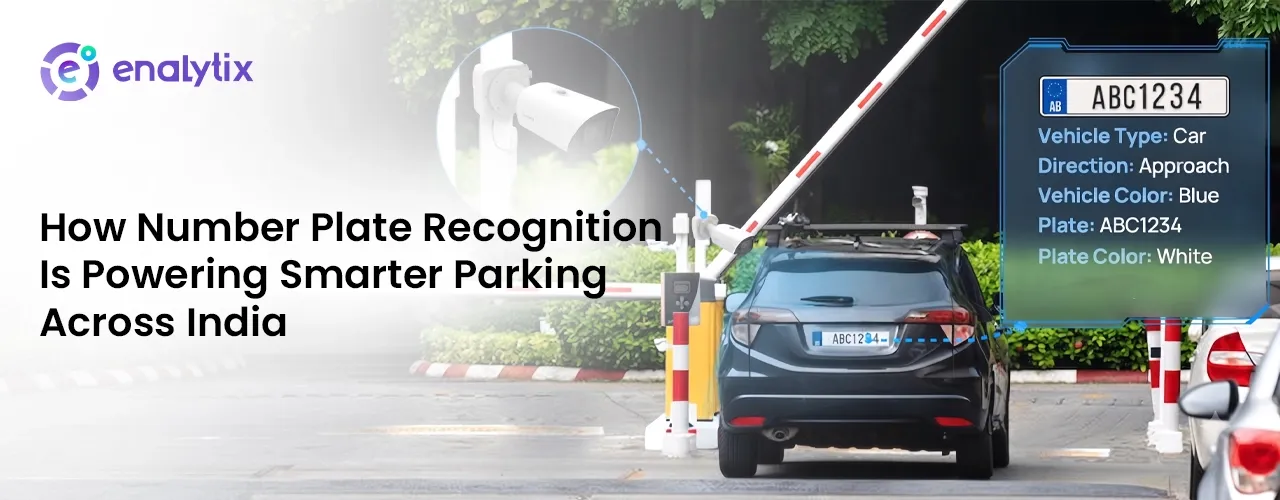
An advanced Automatic Number Plate Recognition (ANPR) architecture works entirely behind the scenes to create a real-time tracking loop:
- It identifies an approaching vehicle footprint as it hits the scanning boundary.
- It extracts the alphanumeric text directly from the license plate using specialized optical character recognition (OCR) engines.
- It translates that visual frame data into a light, encrypted alphanumeric text string within milliseconds.
- It cross-references that string against your centralized employee or vendor database to instantly authorize or block access.
This continuous digital process allows entry checkpoints to operate seamlessly without requiring an employee to roll down their window in monsoon rain or fumble around looking for a physical access card.
Use Cases Beyond Highway Tolling
While fast-tag networks have made plate reading a standard feature on national highways, the application of this technology has quietly shifted inward toward urban business infrastructure. Modern logistics facilities, enterprise zones, and multi-tenant commercial real estate use plate logging to streamline daily operations.
For instance, high-volume retail hubs use ANPR systems to automate parking validation structures, track customer peak visit hours, and identify VIP or recurring shoppers the moment they cross the outer gate lines. Similarly, multi-national logistics and distribution yards layer this technology over their warehouse management workflows. By tracking arrival times automatically, supply chain managers can monitor exact vehicle turnaround times and identify loading bay delays without forcing delivery drivers to manage slow paper manifests at the gate.
ANPR for Campus and Corporate Park Access Control
The biggest operational hurdle for enterprise campuses is handling massive transit surges within limited, specific hour windows. Relying on physical identity cards or RFID tags requires significant capital expenditure on individual distribution, tracking lost passes, and managing physical hardware wear and tear.
Transitioning to advanced ai video surveillance loops completely removes physical tokens from corporate entry management. As a registered car approaches the gate, the camera captures the plate data from up to ten meters away and communicates directly with the gate mechanics.
By eliminating the manual “card-tapping” pause, you maximize entry velocity and prevent the entry lanes from clogging local roads. Furthermore, this provides enterprise teams with a reliable, unalterable digital footprint of all vehicular assets on the property, creating a clean audit trail that integrates effortlessly into workplace attendance or guest management software.
Accuracy Challenges with Indian Plates and Lighting
Deploying a global tracking algorithm directly into the Indian landscape presents unique localized hurdles. Indian roads are a chaotic mix of varying license plate styles—ranging from standard high-security registration plates (HSRP) to regional fonts, customized letter sizes, and non-reflective retro plates covered in dust.
Relying on an unoptimized, off-the-shelf system will quickly lead to massive false rejection rates, especially during lighting shifts. Standard camera lenses get entirely blinded by oncoming high-beam headlights at night or suffer from serious motion blur when a vehicle moves too quickly past the check line.
To overcome these technical limits, an enterprise-grade setup requires an explicit combination of specialized deep-learning text models and robust hardware. The software must be specifically trained to identify localized irregularities, dirt accumulation, and non-standard layouts, translating visual anomalies into clean, actionable text logs flawlessly.
Choosing the Right ANPR Camera and Software Combination
Achieving a high-accuracy, zero-friction tracking environment is not just about choosing a dedicated Automatic Number Plate Recognition Camera to capture the image; the true operational value lies entirely in the cognitive software layer driving it. While high-resolution edge hardware acts as the eyes, our core automatic number plate recognition software acts as the brain, transforming raw, chaotic video inputs into highly structured corporate data.
The software engine is custom-built to address specific commercial operational demands through three key core capabilities:
- Advanced OCR and AI-Parsing for Indian Conditions: Standard algorithms fail when encountering dirt, custom text sizes, or localized regional script variations. Our enterprise software utilizes specialized deep-learning text models that dynamically clean visual occlusion, compensate for severe headlight glare at night, and accurately read cracked or non-reflective plates with a sub-second processing speed.
- Dynamic Whitelisting and Multi-Category Rule Management: The architecture doesn’t just read numbers; it maps access intent. Facility managers can configure distinct vehicle profiles—such as blacklisted vehicles, corporate VIPs, long-term employee passes, and daily vendor logistics. The second a plate is parsed, the software instantly triggers localized actions, whether opening a boom barrier for an executive or sending an immediate security desk alert for a restricted vehicle.
- Seamless API Integration and Data Sync: The software completely avoids closed data silos. It features robust, open API frameworks that hook directly into your pre-existing building infrastructure—including parking management systems, payroll setups, visitor registration databases, and tenant billing tools.
With Enalytix, you move away from isolated, rigid camera setups toward a flexible, intelligent campus perimeter. We repurpose and optimize your physical security network into a unified vehicle management tool that drives efficiency, safeguards human capital, and keeps your operations moving at the speed of data.
Leave a Reply