Malls outperform high streets on footfall as ethnic wear leads demand and premium stores drive better engagement, reveals Enalytix report
external_url=https://bwretailworld.com/retail/tier-3-4-cities-emerge-as-retail-growth-engines
Blog
-

Tier 3 & 4 Cities Emerge As Retail Growth Engines
-

Rajul Tandon Built Enalytix by Asking One Question: Why Is 99% of India’s CCTV Footage Being Wasted?
India’s retail security ran on guards staring at screens. Rajul Tandon flipped the model; turning passive CCTV into a live data engine now running 2,000+ locations.
external_url=https://www.bigstorynetwork.com/content/rajul-tandon-built-enalytix-by-asking-one-question-why-is-99-of-indias-cctv-footage-being-wasted -
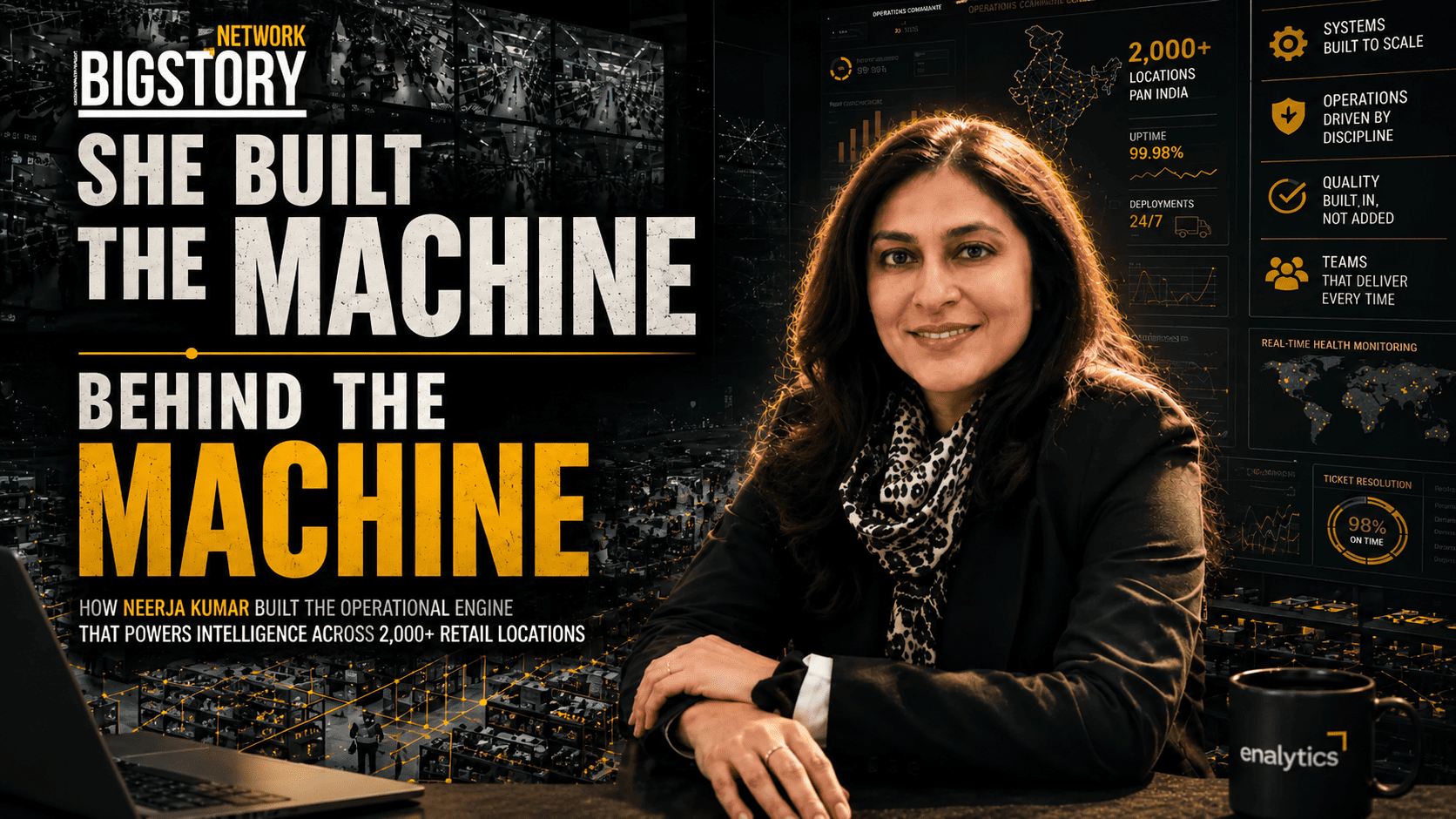
Stop Breaking Things: Neerja Kumar on Why Execution is the Ultimate Startup Moat
Neerja left Accenture during a pandemic lockdown, joined Enalytix and built the operational system behind 2,000+ enterprise deployments. The execution playbook.
external_url=https://www.bigstorynetwork.com/content/stop-breaking-things-neerja-kumar-on-why-execution-is-the-ultimate-startup-moat -
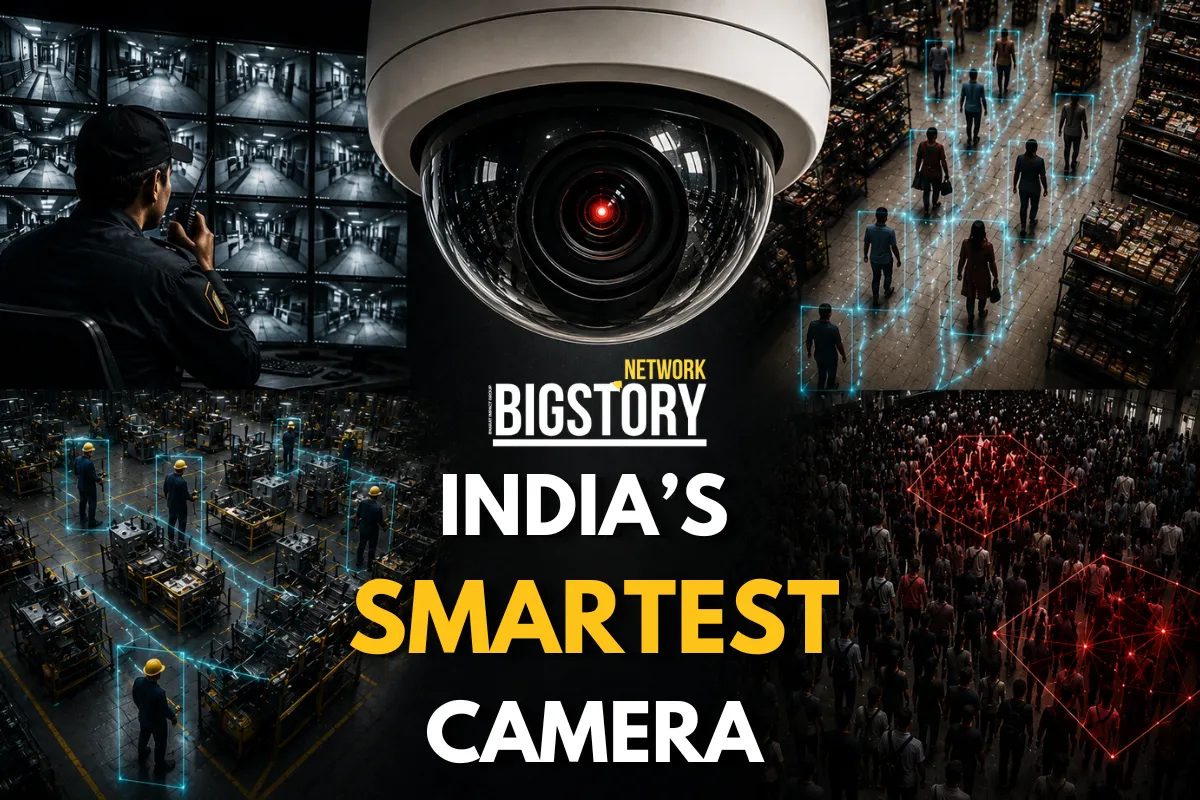
Enalytix: The Company That Gave India’s Retail Cameras a Brain They Never Had
India’s physical retail runs on idle CCTV cameras. Enalytix built a software layer on top — turning footage into footfall intelligence across 2,000+ locations.
external_url=https://www.bigstorynetwork.com/content/enalytix-the-company-that-gave-indias-retail-cameras-a-brain-they-never-had -
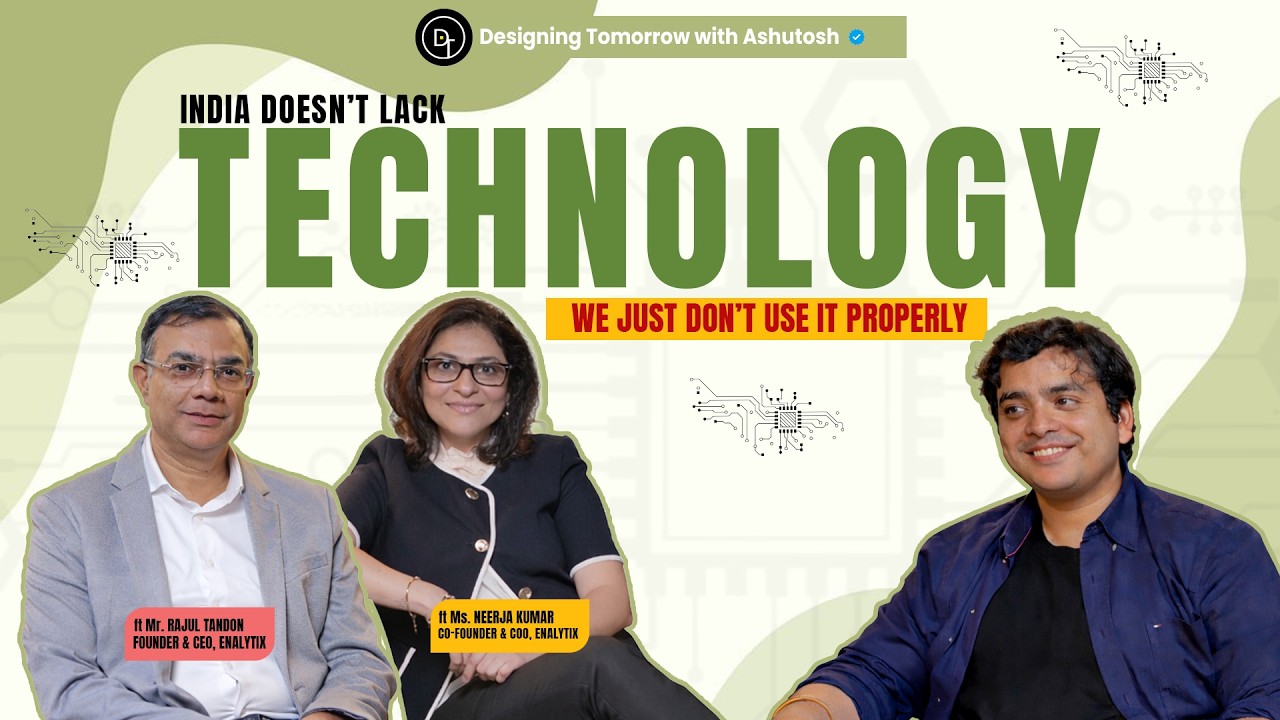
Zero Churn. Bootstrapped. No Investors. How They’re Quietly Winning: Success Story by Neerja & Rajul
India has 100 million CCTV cameras. And we consult them only when something goes wrong.
external_url=https://youtu.be/VJyffItZ9lQ?si=oKnEzZ6flOw0hqIX -

This AI Business Turns CCTV into Real Business Insights
Turning everyday cameras into powerful business intelligence
AI is redefining how we see, analyze, and act in real time.
external_url=https://www.instagram.com/p/DXtg369iqk5/?utm_source=ig_web_copy_link&stkn=NTc4MTIwNjQ2YQ== -
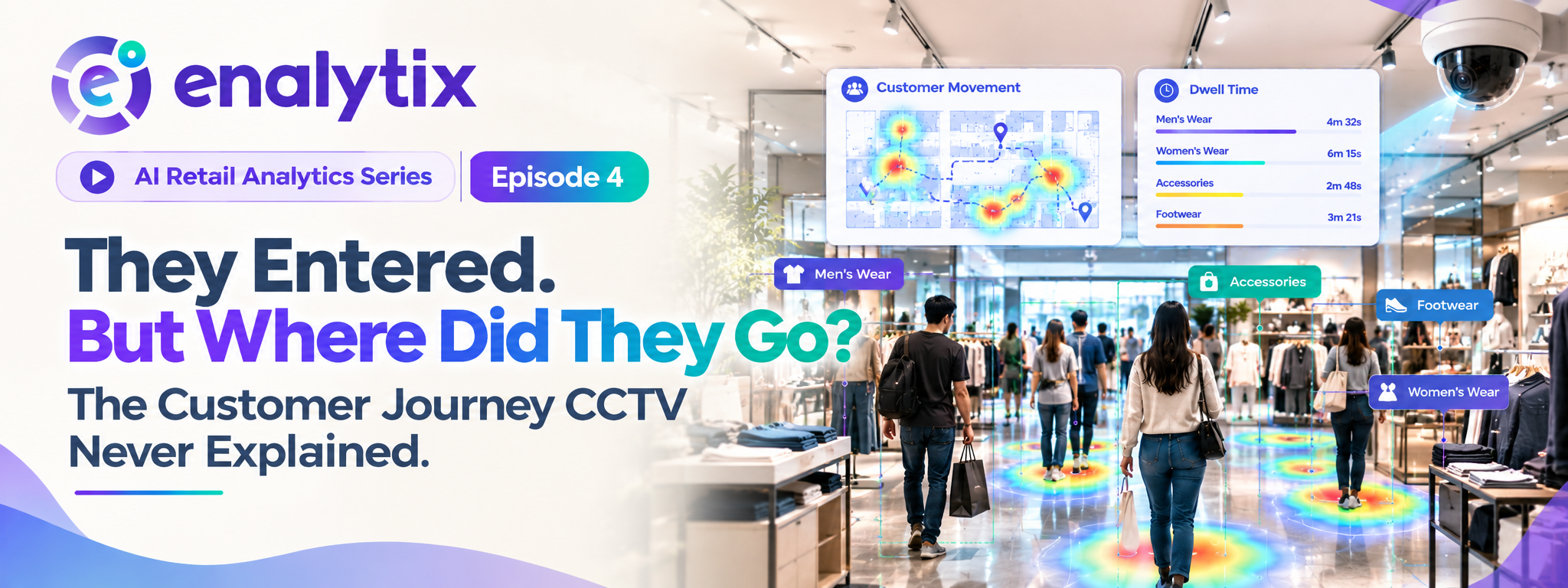
AI Retail Analytics: EP. 4 –They Entered. But Where Did They Go? The Customer Journey CCTV Never Explained
Introduction
In Episode 1, a footfall counter gave retailers a real number for how many people walk into the store. Episode 2 broke that number down by the hour to show the peak times, and Episode 3 showed why one footfall number only makes sense when it is compared with something.
Now a new question comes up. The store knows how many people came in and when, but what happens after they cross the door? This episode looks at why the journey inside the store stays invisible, and how footfall, movement, heatmaps and dwell time together finally make it visible.
The Number That Stops at the Door
A footfall counter tells the retailer how many people entered the store. It does not tell them what those people did next. From the owner’s point of view, every visitor disappears into the store the moment they walk past the entrance.
So the retailer ends up with a strong, reliable number for the door and no number at all for everything after it. And the part that goes missing is the part where buying decisions are actually made. A store can know it had a record number of visitors and still have no idea whether they ever reached the shelves that matter. What really happens between the door and the billing counter?
What Happens Between the Entrance and the Billing Counter
Inside the store, customers walk through different sections, stop at some shelves and walk straight past others. Some leave without ever reaching the products the store most wants them to see.
Owners can usually account for two points: the entry and the final bill. Everything in between stays a guess. A store may believe a corner is slow because of the product, when customers simply never walked there. Or it may believe a display is working because the area looks crowded, when people are only standing in the way. The cameras were covering the whole store the entire time, so why didn’t they show any of this?
Why the Cameras Recorded the Journey but Never Explained It
Every aisle is covered by CCTV, so the full journey technically exists on video. But a standard camera only records. It does not say which areas customers visited, where traffic was highest or which zones were being ignored.
Watching the footage back shows single moments, not the overall pattern, and a full day of video is far too long for anyone to review with real attention. Even a manager who does sit down to review it can only watch one camera view at a time, while customers move across many. The information is on camera, but it has never been turned into an answer. Could someone just sit and track it by hand?
Why Watching Customers Around the Store Can’t Be Done by Hand
No staff member can follow every visitor or watch every section all day. Staff are already busy serving customers and running the floor. Even if someone tried, what they noticed would be partial, shaped by whatever caught their attention that day, and two people watching the same afternoon would describe it differently. Tracking by hand also breaks down in the busiest hours, which are exactly the hours that matter most.
So the journey cannot be measured by people alone. The cameras themselves need to start reading what they see, and that begins with the simplest number of all: the count at the door.
How Footfall Analytics and People Counting Set the Starting Point
Footfall Analytics turns the cameras already in the store into a real-time footfall counter. Every visitor who enters is counted automatically, and the numbers show up on a live dashboard, so the store (and head office, for a chain) does not have to wait for a report. Because it works with existing CCTV, the same camera becomes a people counting camera, and the setup can scale across many stores for retail people counting.
This matters for the journey because a reliable people counting system gives the baseline. Without a trusted entry count, nothing inside the store can be judged, since there is no way to tell whether a section is busy because many people came in or because very few did. Each number can also be checked against the actual video, so teams can trust it. With that baseline in place, the store can start asking where those visitors went.
How In-Store Analytics Turns Camera Views Into Customer Movement
In-Store Analytics builds on that count. It tracks customer and staff movement across the store in real time, using the same cameras. The store can see which areas customers visit, where traffic is highest and which zones are being ignored, instead of only getting a total for the day.
This is what turns plain footage into customer journey analytics. The camera stops being a passive record and starts showing how people actually move through the floor. Everything appears on one unified dashboard, each insight can be verified against video evidence, and because staff movement is tracked as well, the store can also see who is on the floor. Knowing where customers go is useful, but knowing how long they stay there tells the real story.
What Heatmaps and Dwell Time Show About Each Section
Shopper Dwell and Heatmaps add the detail. Heatmap analysis shows which areas attract the most visitors and which get ignored. Dwell time analysis shows how long customers stay in each section.
Together they answer something a footfall number alone never can: busy is not the same as engaging. A section with heavy traffic but a very short dwell time may just be a walkway that people pass through. A section with fewer visitors but a long dwell time may be holding real interest, and may deserve better visibility. Without both views, the store would treat these two sections very differently from how it should. So what does a store actually do with all this?
What a Store Can Do Once the Customer Journey Is Visible
Placement decisions can now be based on real movement. Products and offers that matter most can be moved to areas customers actually walk through, and ignored sections can be understood instead of being blamed on the wrong cause, like the product, when the real cause is the layout or the path.
After a change, the store can compare traffic and dwell time before and after, and see whether it worked instead of waiting for a monthly sales number. For a chain, the unified dashboard shows how the same layout performs across stores. And because insights come with video evidence, a team can look at what was really happening in a section before deciding anything. Footfall plus movement gives retail analytics a complete picture, from entry to exit.
Conclusion
Counting visitors was only the start. Understanding where they go and how long they stay is what turns that count into something a retailer can act on. Enalytix’s Footfall Analytics and In-Store Analytics bring people counting, movement, heatmaps and dwell time together, using the same cameras already in the store.
But the journey can go wrong in more than one place. What happens when too many customers reach the same place at the same time?
-

The Rise of Purpose-Led Women Founders in 2026
Women’s Day 2026 reflects a defining shift in India’s startup ecosystem. Today’s women founders are not only building scalable companies, but they are organising fragmented sectors, strengthening digital infrastructure, and creating brands rooted in purpose.
external_url=https://thetelegraphnews.com/the-rise-of-purpose-led-women-founders-in-2026/ -

Smart Cameras, Smarter Decisions: The Enalytix Interview
In an exclusive interaction, we spoke with Neerja Kumar, COO and Co-founder, and Rajul Tandon, CEO and Founder of Enalytix, to understand how the company is redefining AI-powered video analytics in India and beyond.
external_url=https://youthnewsexpress.com/smart-cameras-smarter-decisions-the-enalytix-interview/ -

The Growing Demand for Real-Time Monitoring in Critical Infrastructure, Retail, and Public Safety
In today’s world, real-time monitoring for the efficient upkeep of safety and security has become indispensable.
external_url=https://www.theceo.in/business-experts/the-growing-demand-for-real-time-monitoring-in-critical-infrastructure-retail-and-public-safety